

Sire Black on dam Gray Dark Brown
In this article, we will explore the genetic possibilities of coat colors for the crossing between a stallion Black and a mare Gray Dark Brown. Equine genetics is a universe of combinations where dominant and recessive alleles determine the final coat of each individual.
On one side, we have the stallion Black. Genetically, it presents the base genotype E/_ a/a. Entirely black coat, with no dilutions and no Agouti gene action restricting black pigment to the points.
On the other side, the mare Gray Dark Brown contributes with its genetics based on E/_ A/_ G/n. The (G) gene acts on the base coat promoting progressive lightening throughout the horse's life until reaching very pale or completely white tones. This coat is based on Dark Brown.
Quando combinamos esses códigos genéticos, criamos uma matriz de probabilidades. É importante lembrar que o resultado visual (fenótipo) muitas vezes esconde genes recessivos que podem pular uma geração.
The Genotypes Involved
For a horse to have the coat Black. it carries specific gene combinations. The possible genotypes for the sire include variants such as: E/e a/a, E/E a/a.
As for the dam, being Gray Dark Brown, may present in its DNA the alleles: E/e A/a G/n, E/e A/a G/G, E/e A/A G/n, E/e A/A G/G, E/E A/a G/n, E/E A/a G/G, E/E A/A G/n, E/E A/A G/G.
Understanding the Alleles
To understand the result of this crossing, note the gene sets at play:
- E/ (Extension - Dominant): The Extension gene controls eumelanin (black) production. At least one E allele allows the horse to have black hairs.
- A/ (Agouti - Dominant): The Agouti gene controls black distribution. The A allele restricts black pigment to the points (mane, tail, legs).
- a/a (Non-Agouti - Recessive): Allows black pigment to spread uniformly across the body. Essential for Solid Black (if E/).
- G/ (Grey - Tordilho): Causes progressive greying. It is epistatic (covers other colors).
Calculated Probabilities
Being the sire Black with genotype (E/e a/a), it transmits the (E) allele (black factor) to 50% and the (e) allele (red factor) to the other 50% and transmits the (a) allele to 100% of offspring, allowing black to spread in homozygosis (if Extension is present).
Being the sire Black with genotype (E/E a/a), it transmits the (E) allele to 100% of offspring, enabling black pigment production (eumelanin) and transmits the (a) allele to 100% of offspring, allowing black to spread in homozygosis (if Extension is present).
Being the dam Gray Dark Brown with genotype (E/e A/a G/n), it transmits the (E) allele (black factor) to 50% and the (e) allele (red factor) to the other 50% and transmits the (A) allele (restriction) to 50% and the (a) allele (no restriction) to the other 50% and has a 50% chance of transmitting the Grey allele (G).
Being the dam Gray Dark Brown with genotype (E/e A/a G/G), it transmits the (E) allele (black factor) to 50% and the (e) allele (red factor) to the other 50% and transmits the (A) allele (restriction) to 50% and the (a) allele (no restriction) to the other 50% and always transmits the Grey allele (G).
Being the dam Gray Dark Brown with genotype (E/e A/A G/n), it transmits the (E) allele (black factor) to 50% and the (e) allele (red factor) to the other 50% and transmits the (A) allele to 100% of offspring, restricting black pigment to the extremities and has a 50% chance of transmitting the Grey allele (G).
Being the dam Gray Dark Brown with genotype (E/e A/A G/G), it transmits the (E) allele (black factor) to 50% and the (e) allele (red factor) to the other 50% and transmits the (A) allele to 100% of offspring, restricting black pigment to the extremities and always transmits the Grey allele (G).
Based on a standard scenario, the statistical chances for foals from this crossing are:
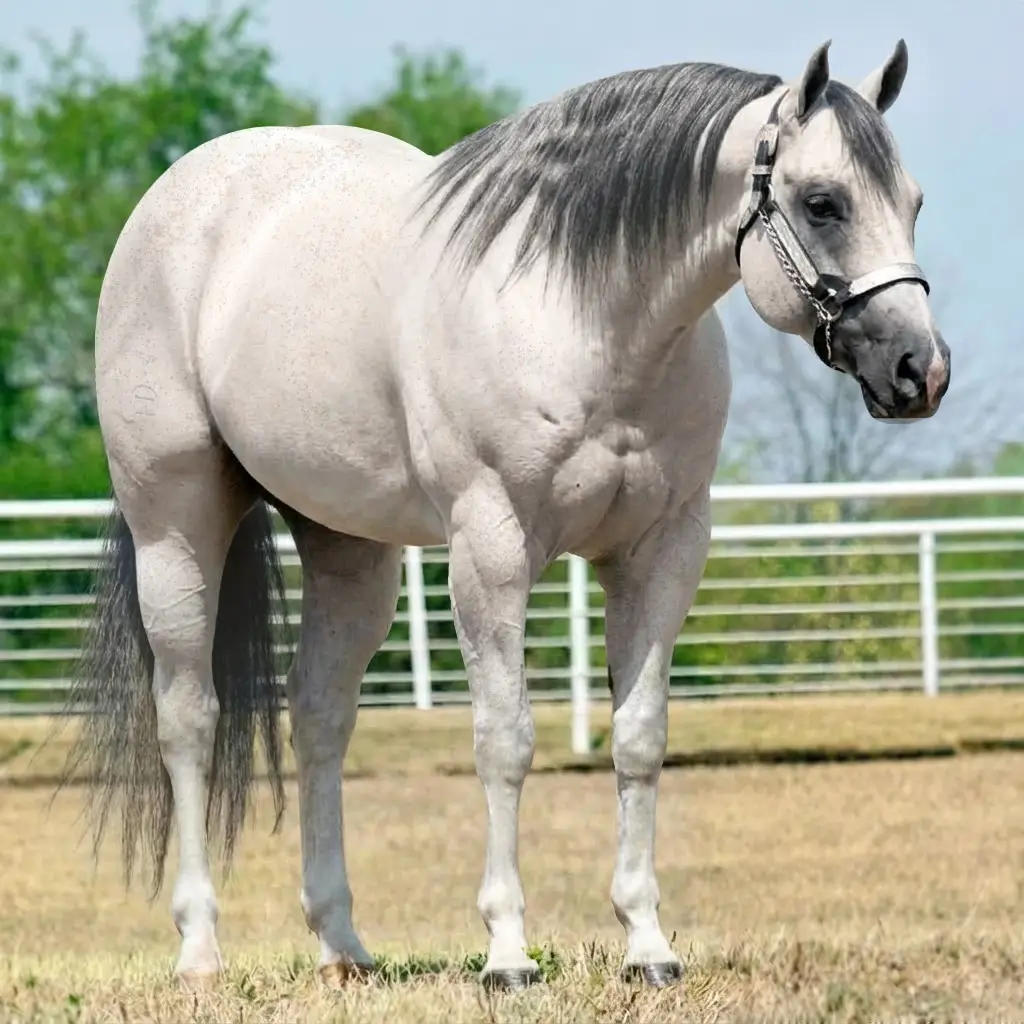 Gray Bay
Open Coat ➜ 26,6%
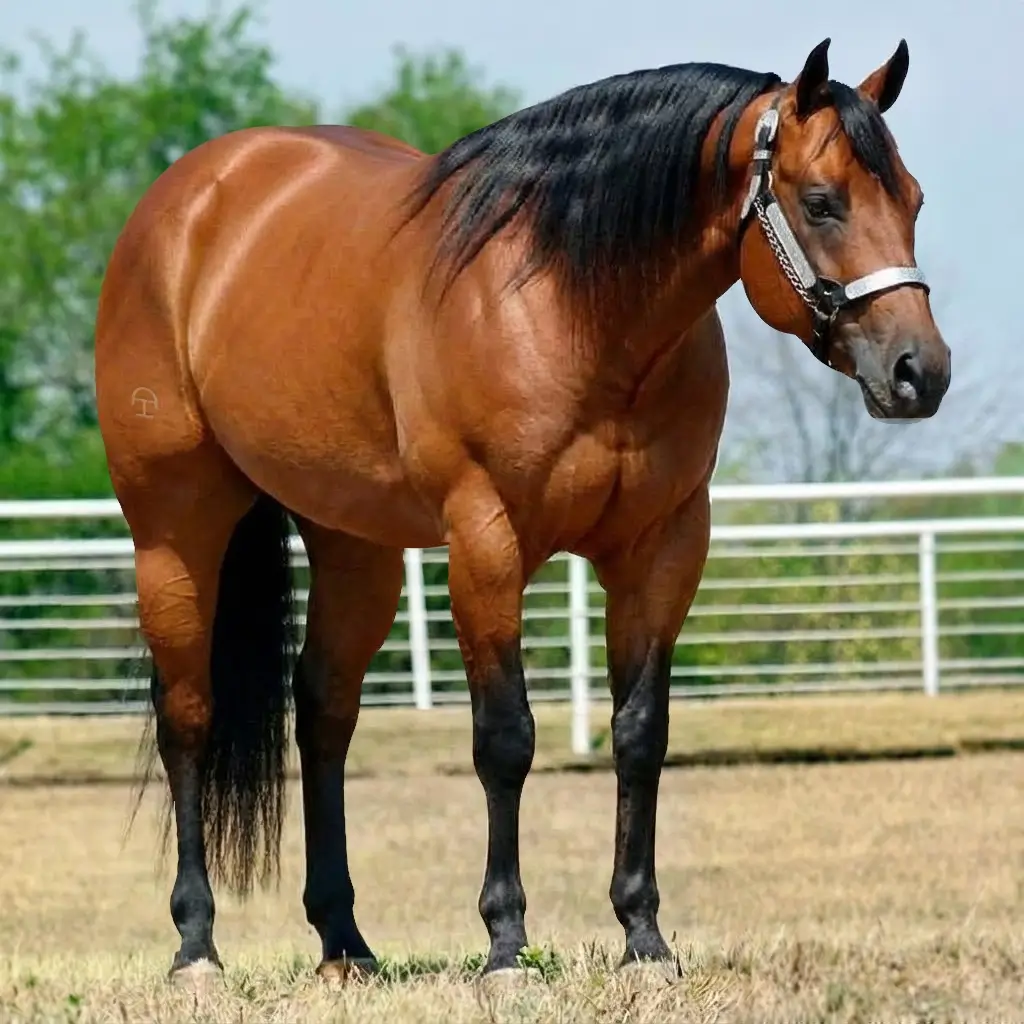 Bay
BayOpen Coat ➜ 26,6%
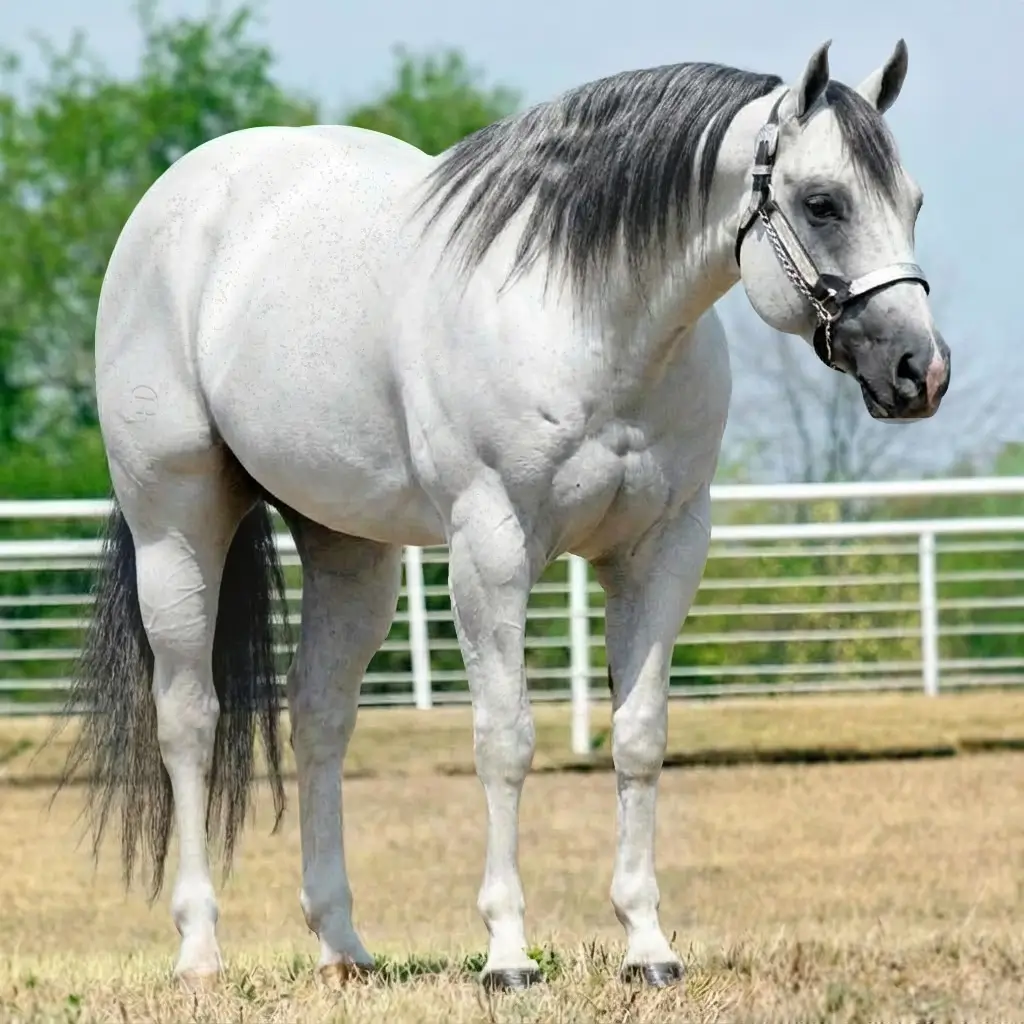 Gray Black
Open Coat ➜ 14,3%
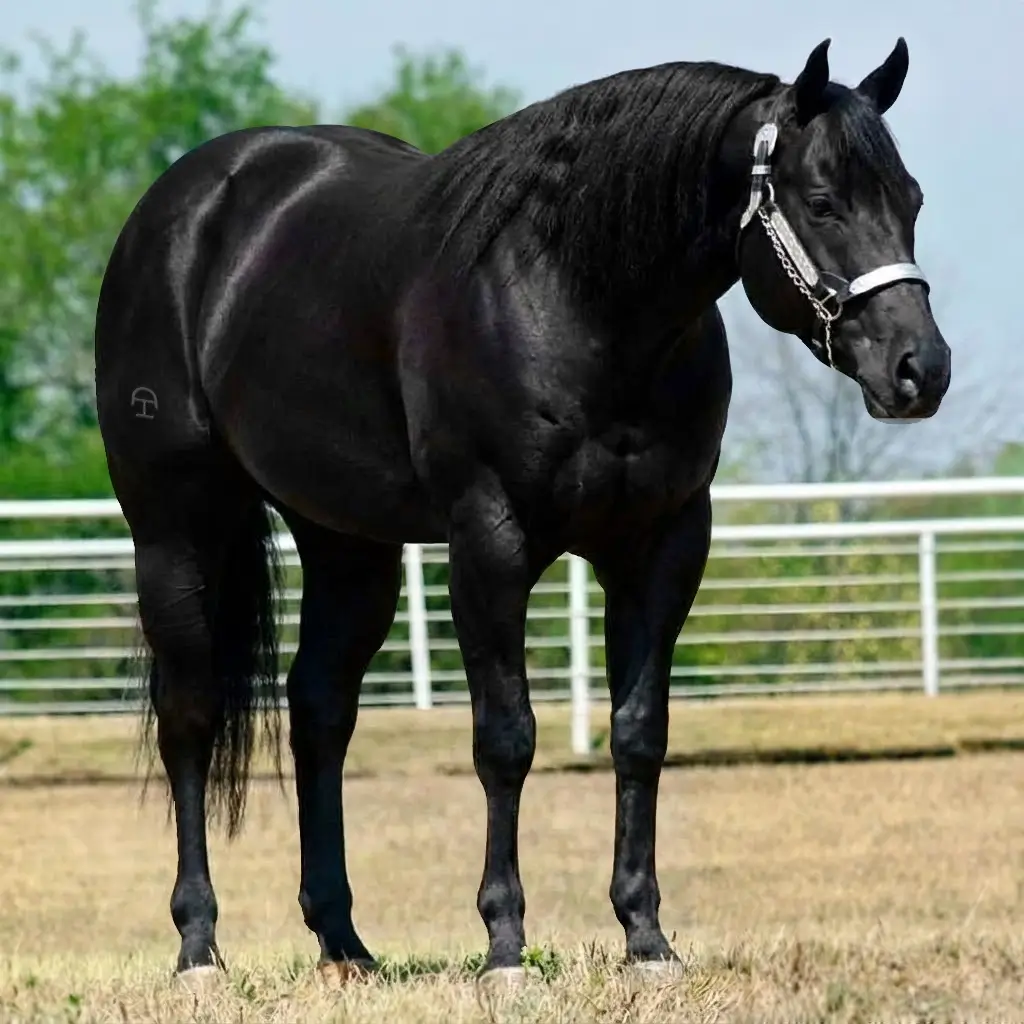 Black
BlackOpen Coat ➜ 14,3%
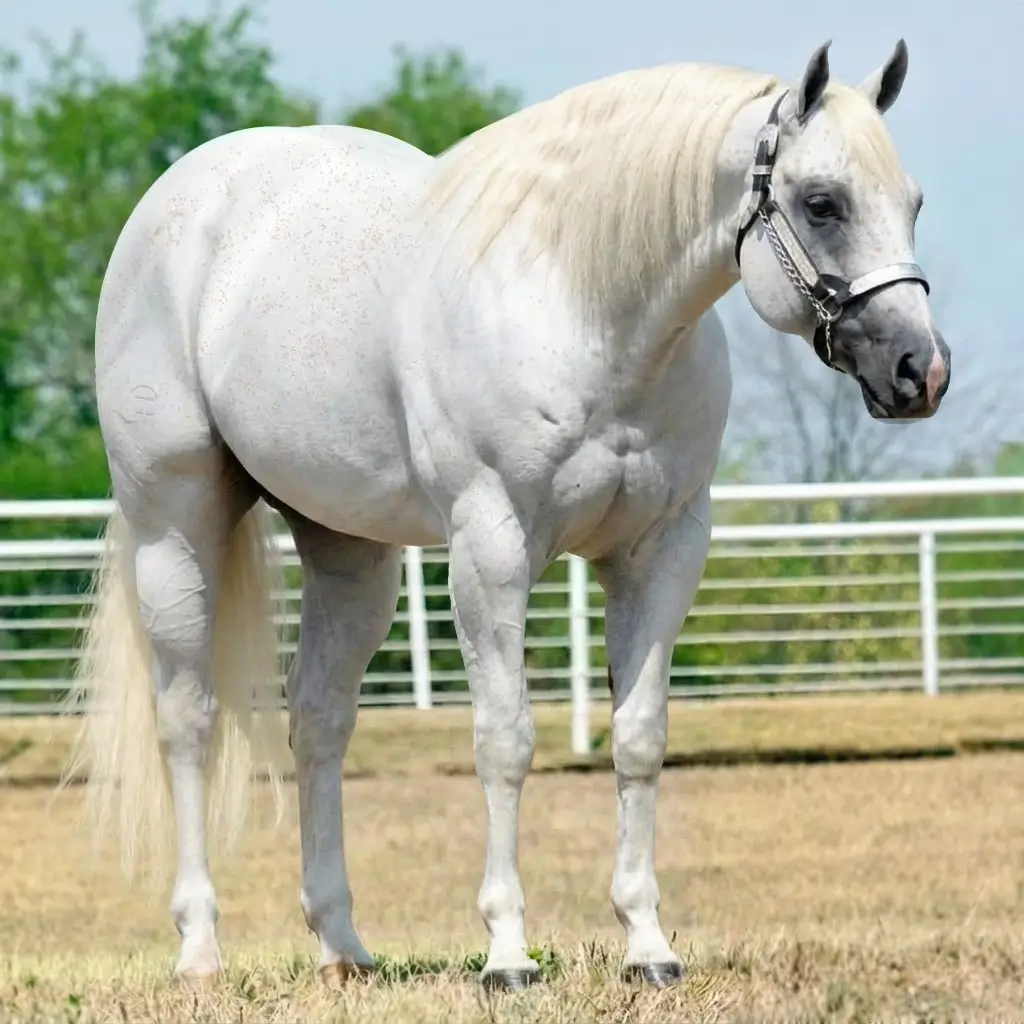 Gray Chestnut
Open Coat ➜ 6,1%
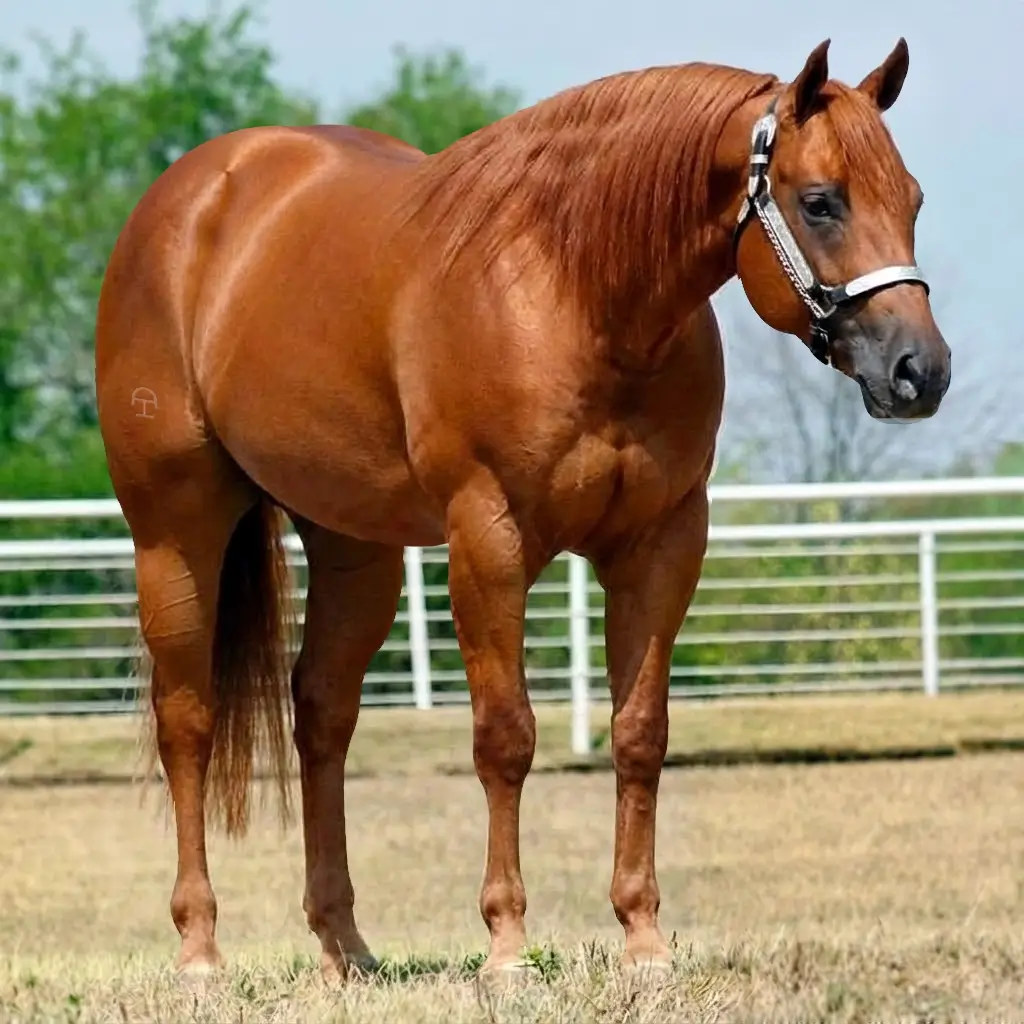 Chestnut
Open Coat ➜ 6,1%
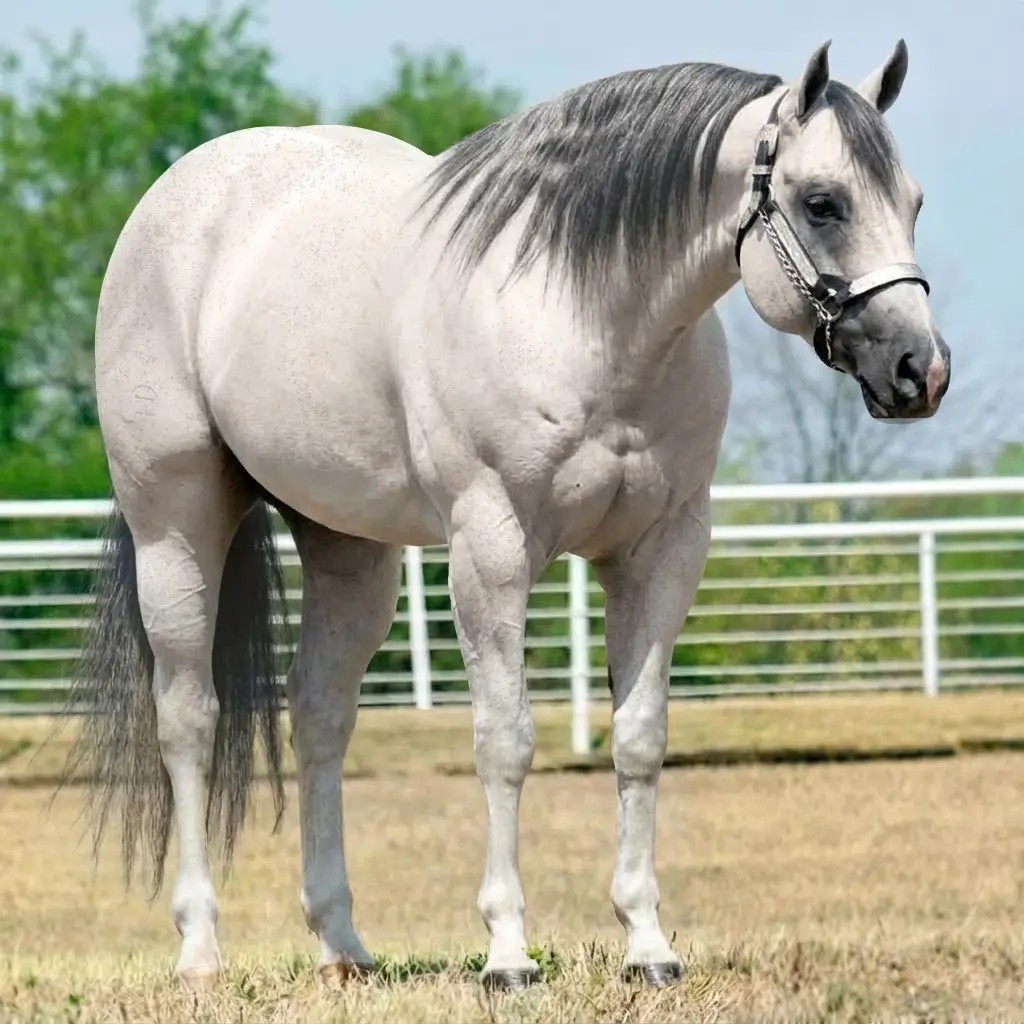 Gray Dark Brown
Open Coat ➜ 3,0%
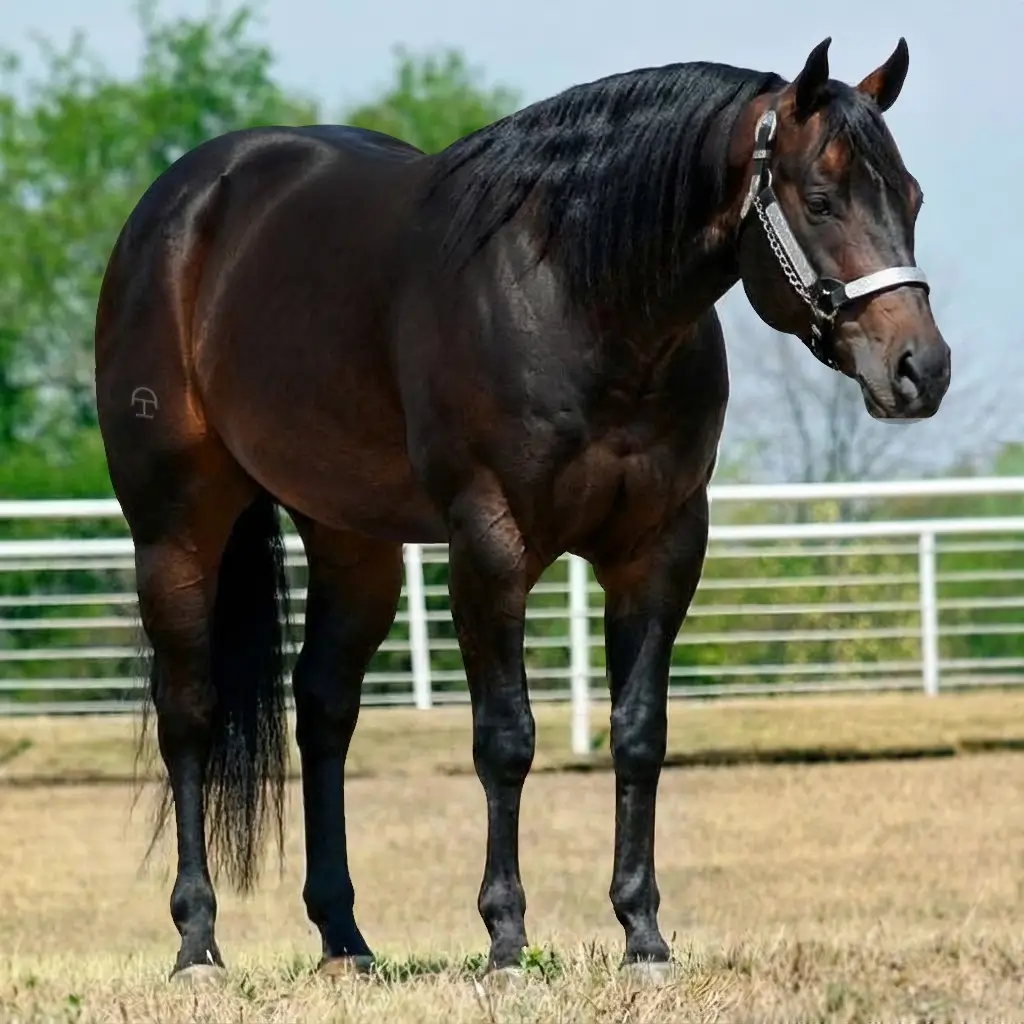 Dark Brown
Open Coat ➜ 3,0%
Want absolute precision?
Genetics is detailed. Knowing whether the animal is Homozygous or Heterozygous completely changes the result. You can run 100% precise simulations by filtering according to the exact genotype of your animal in our App.
Open Rancholi Simulator