
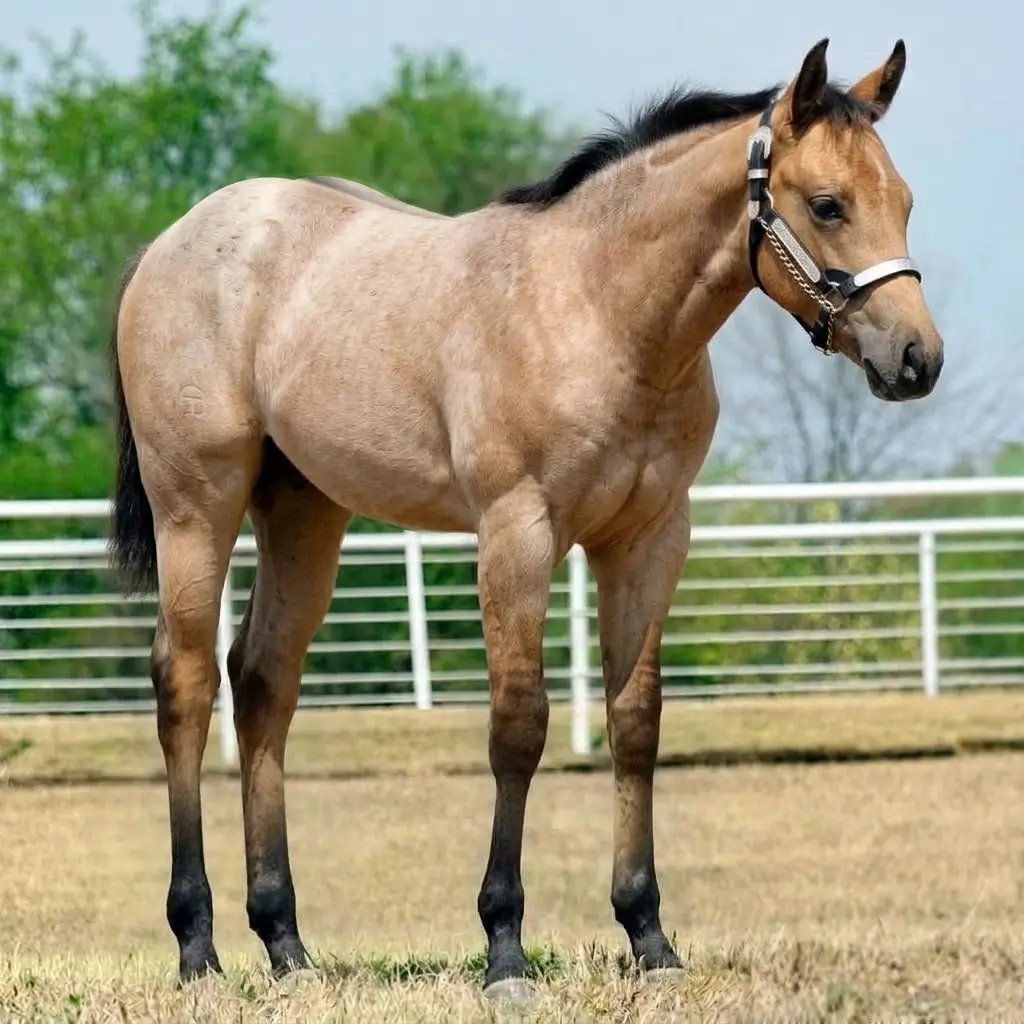
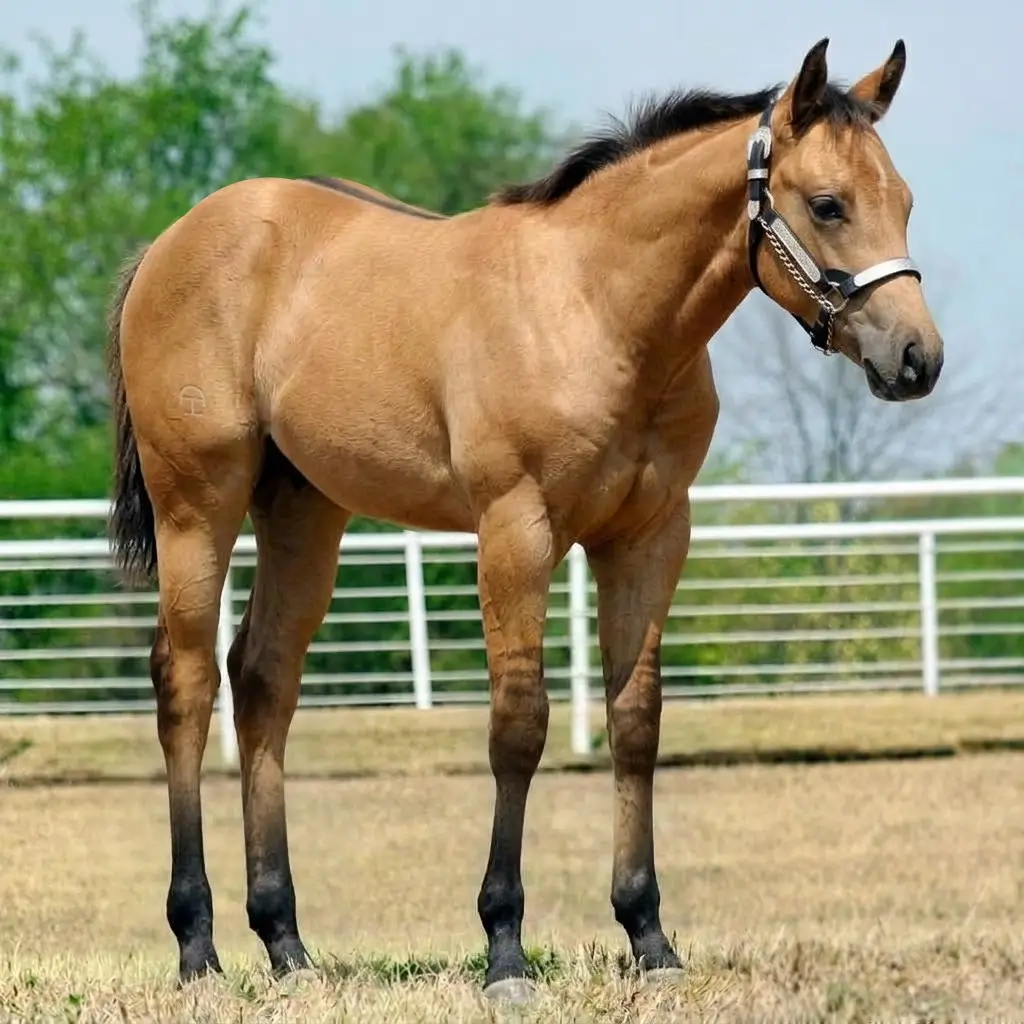
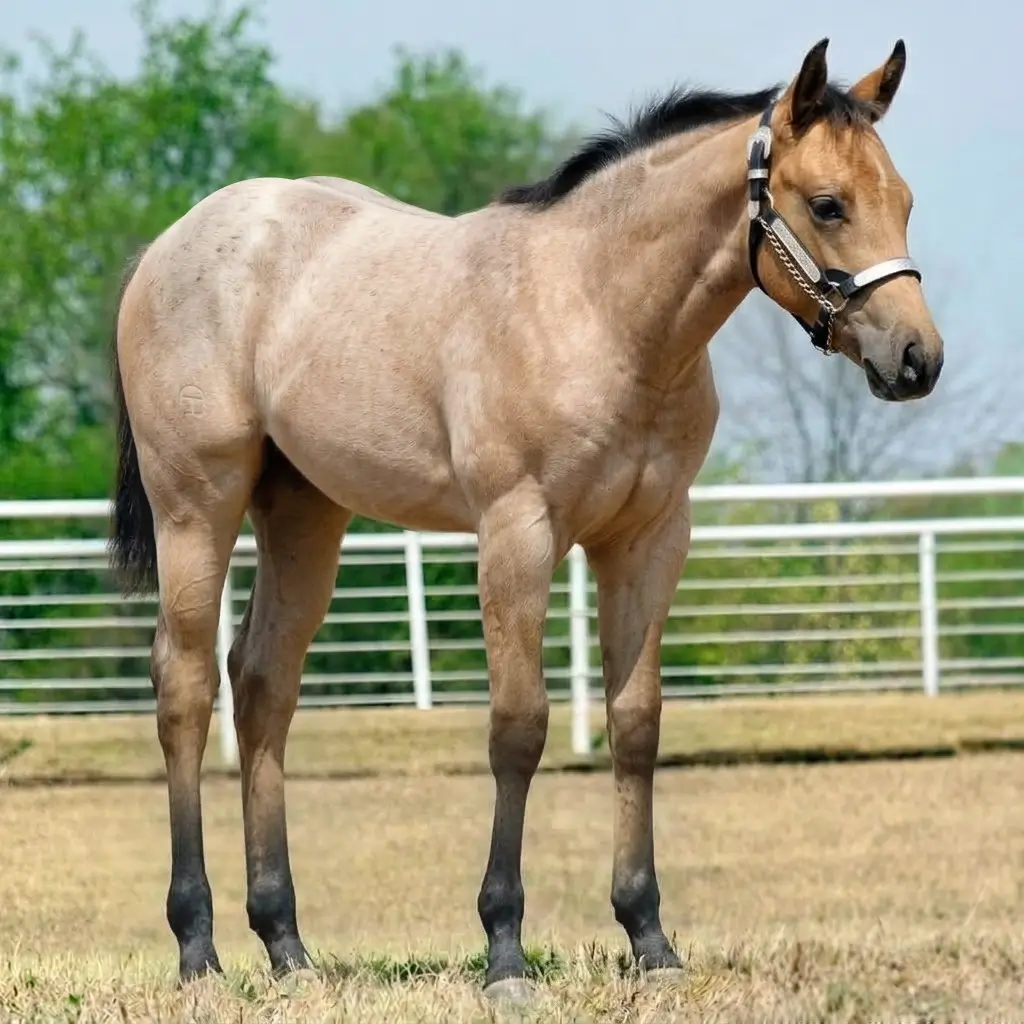
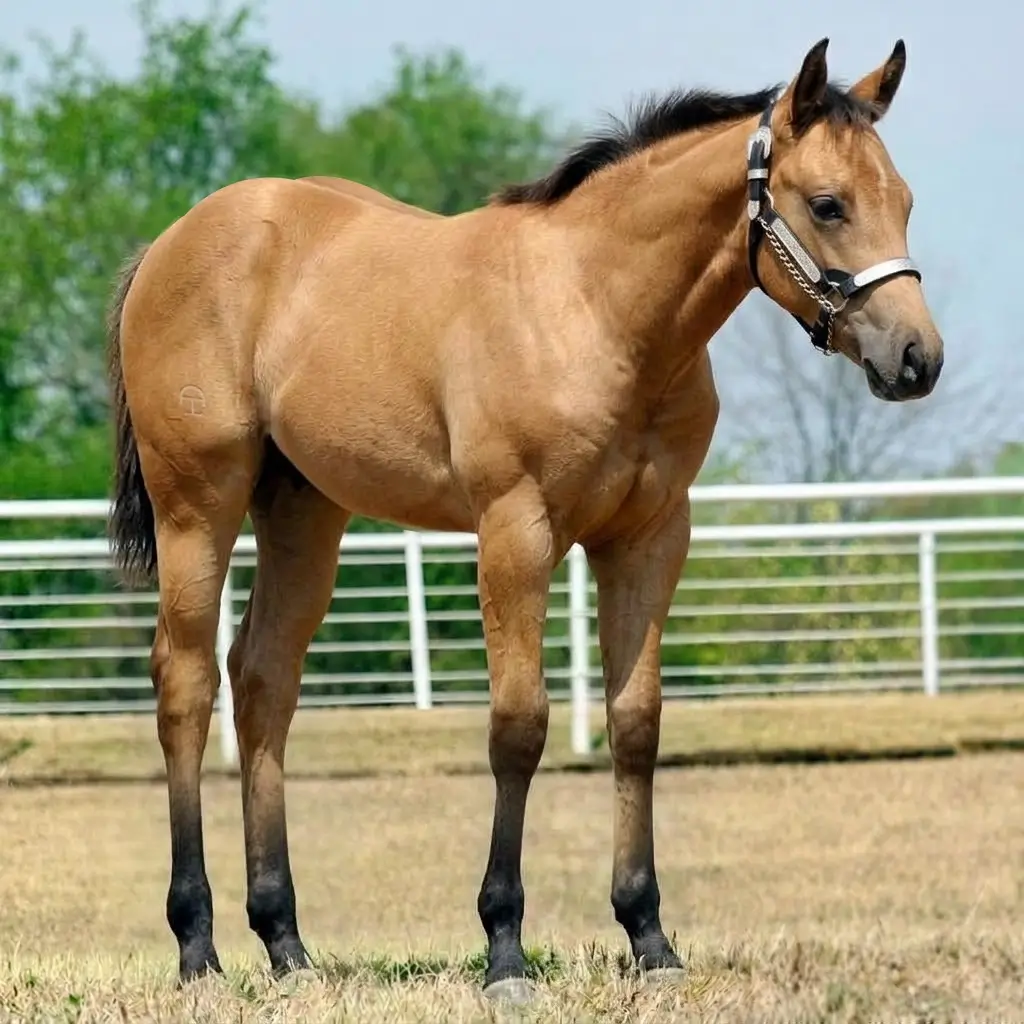
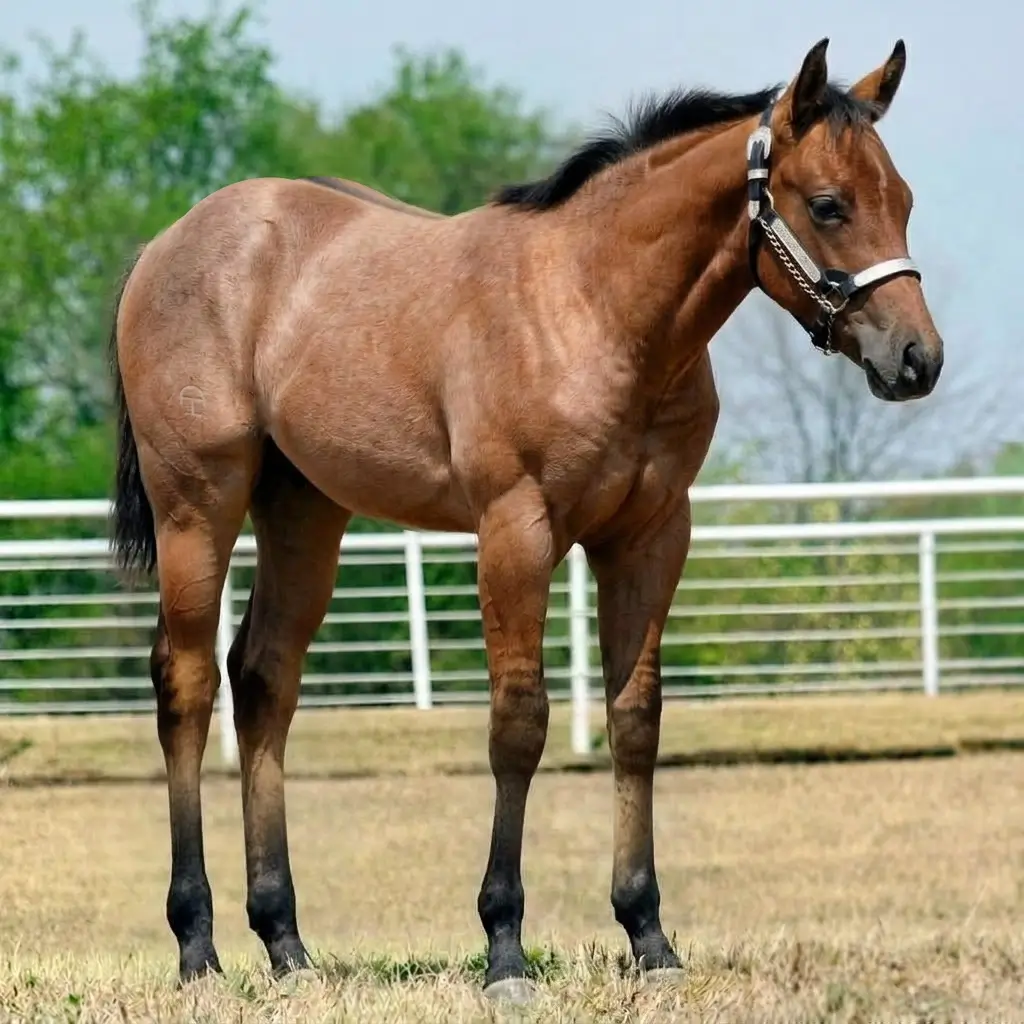
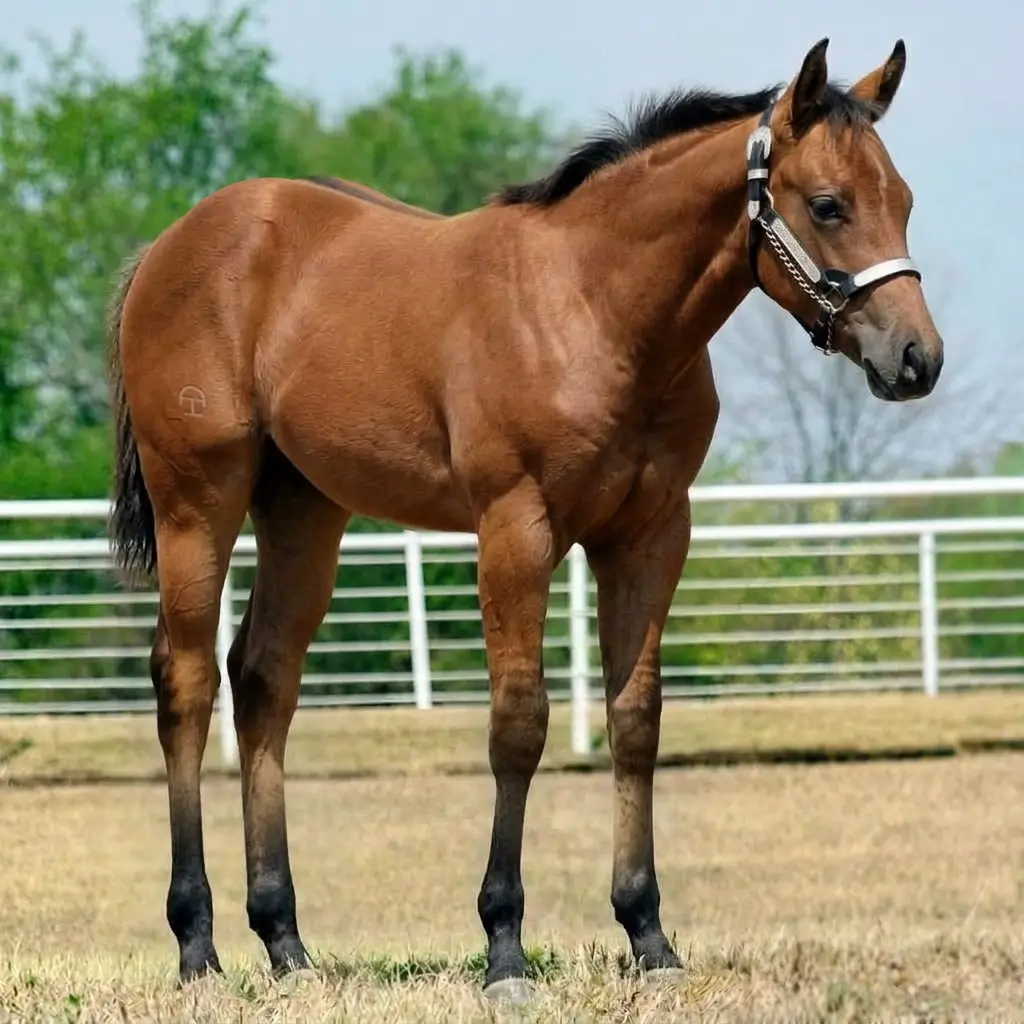
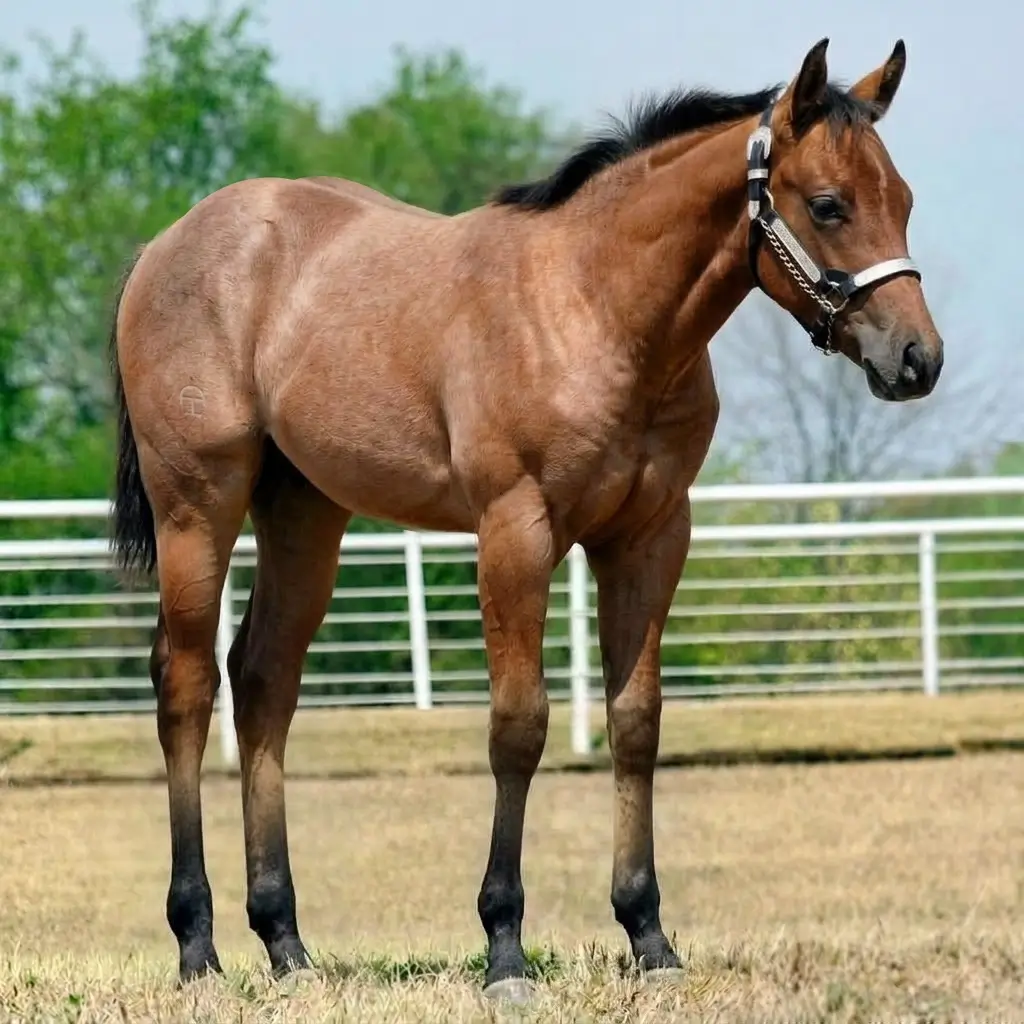
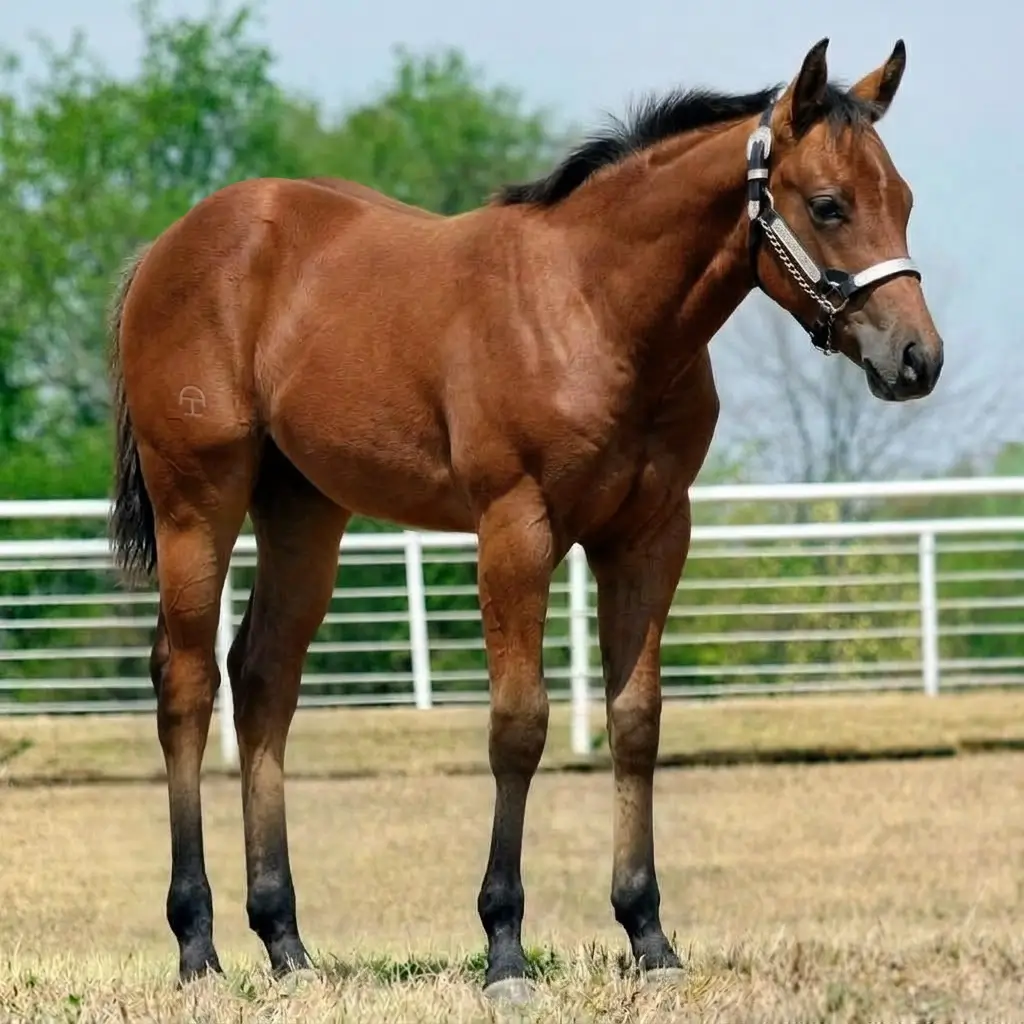
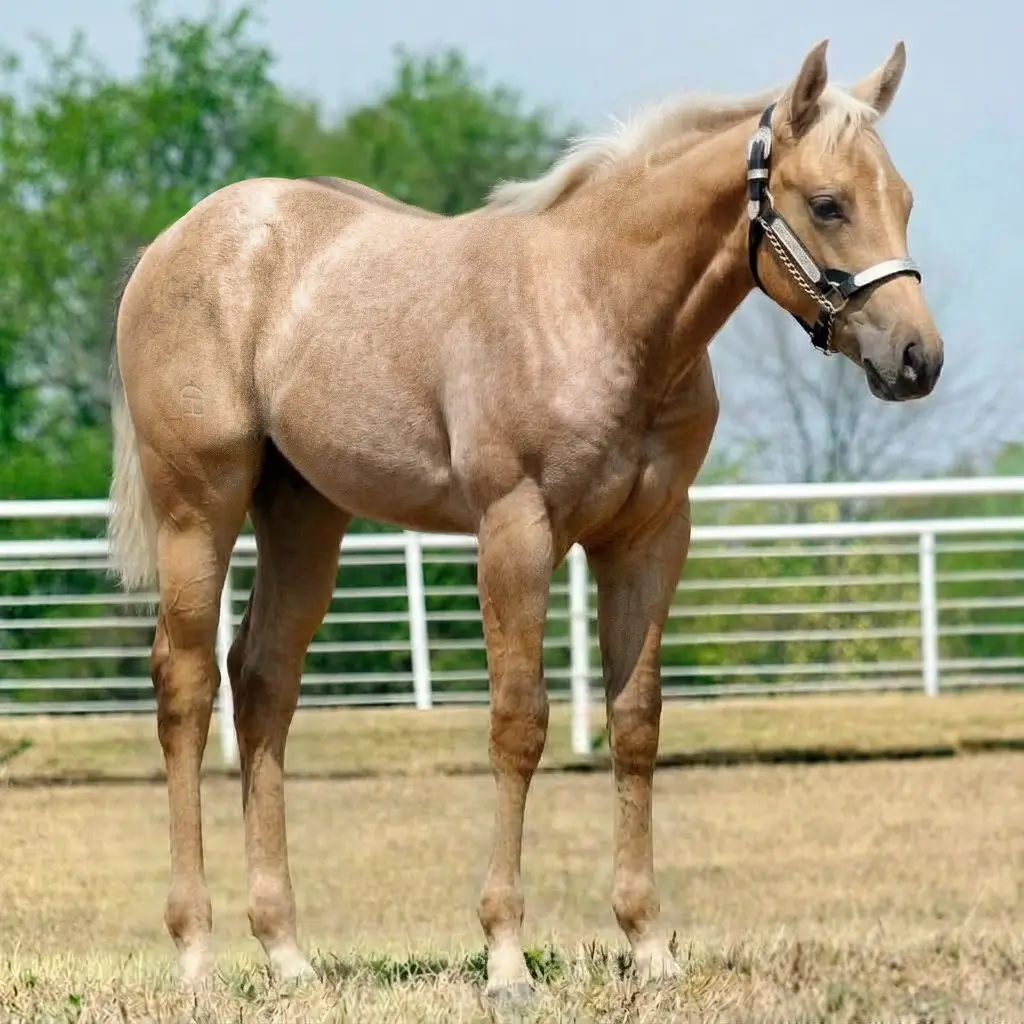
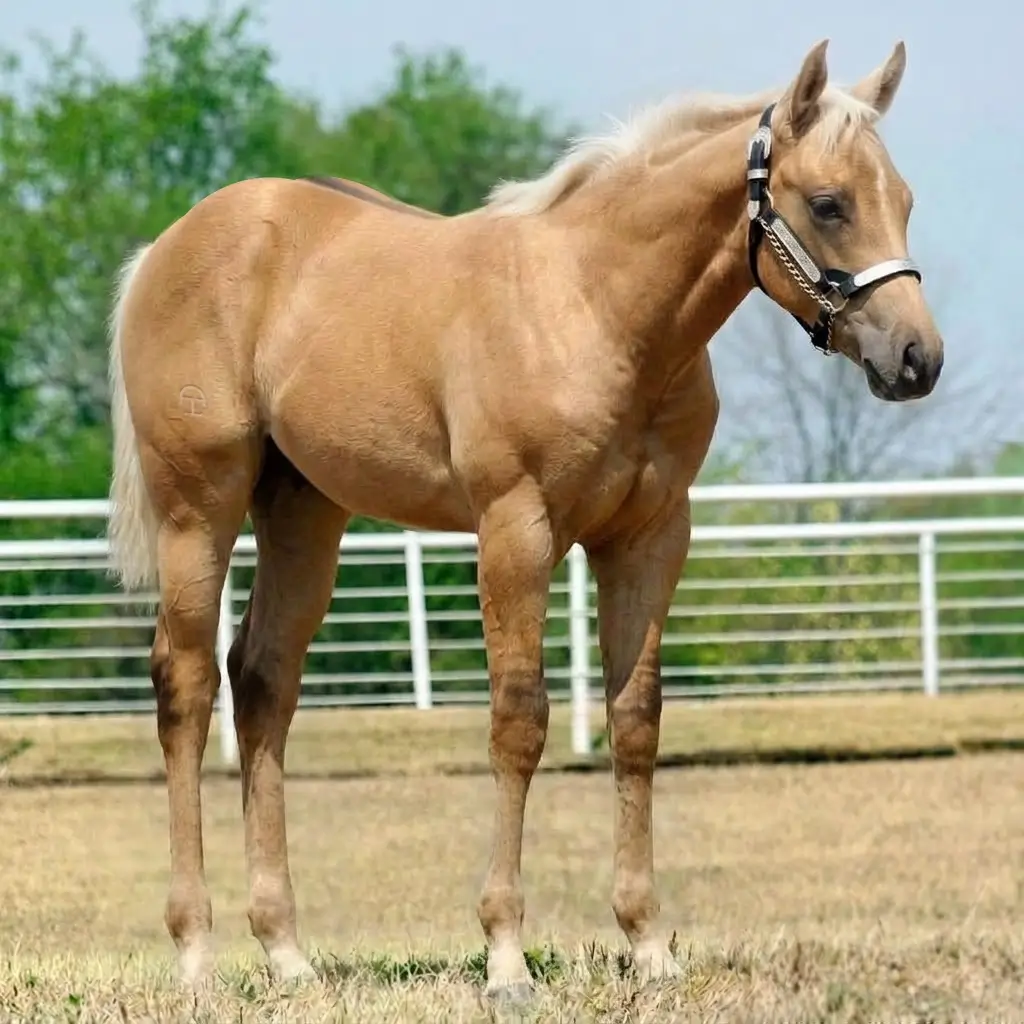
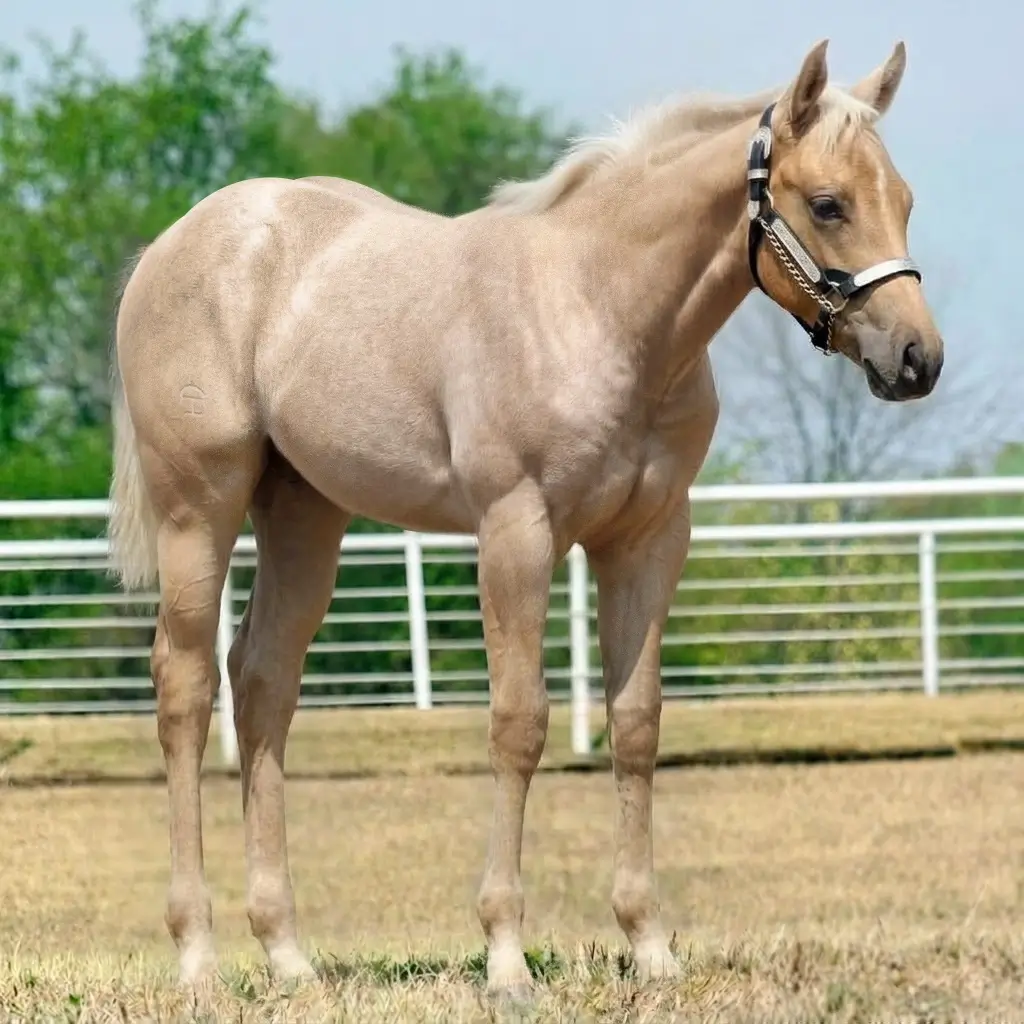
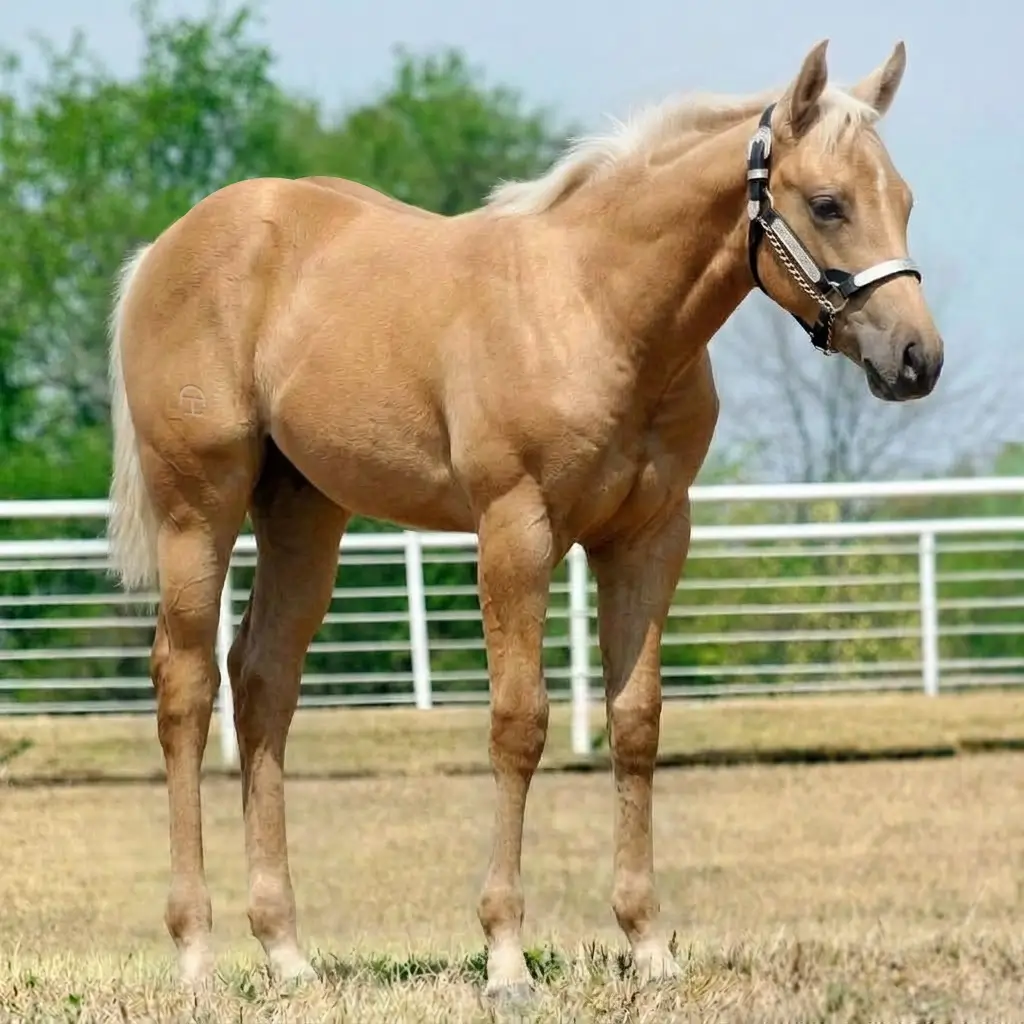
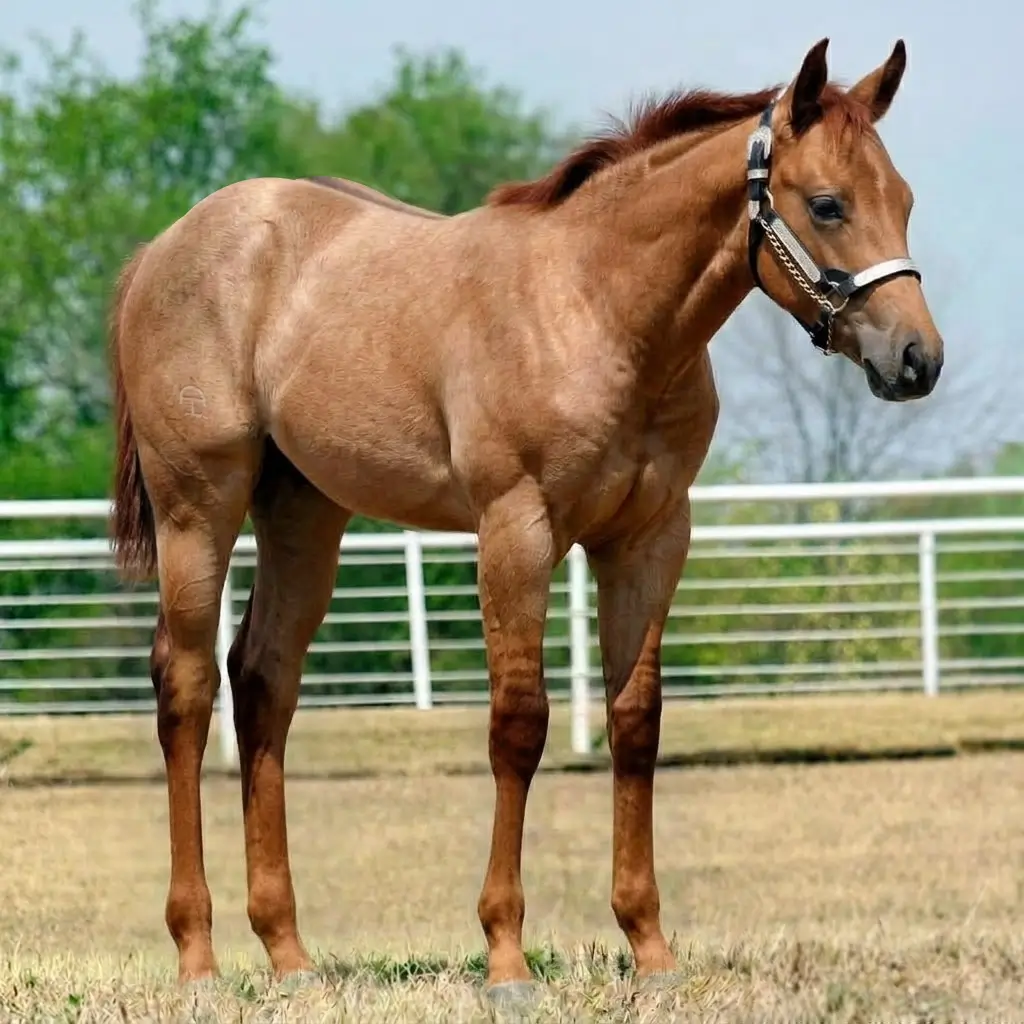
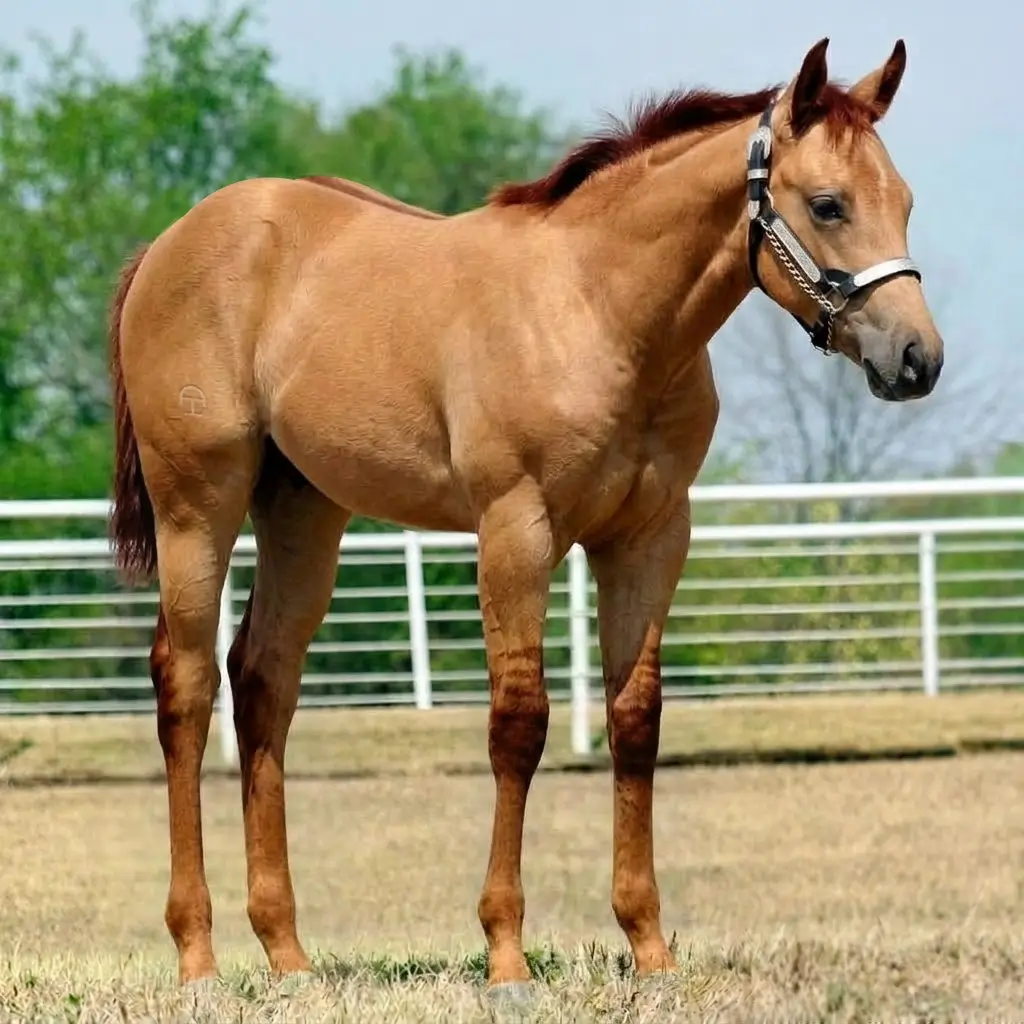
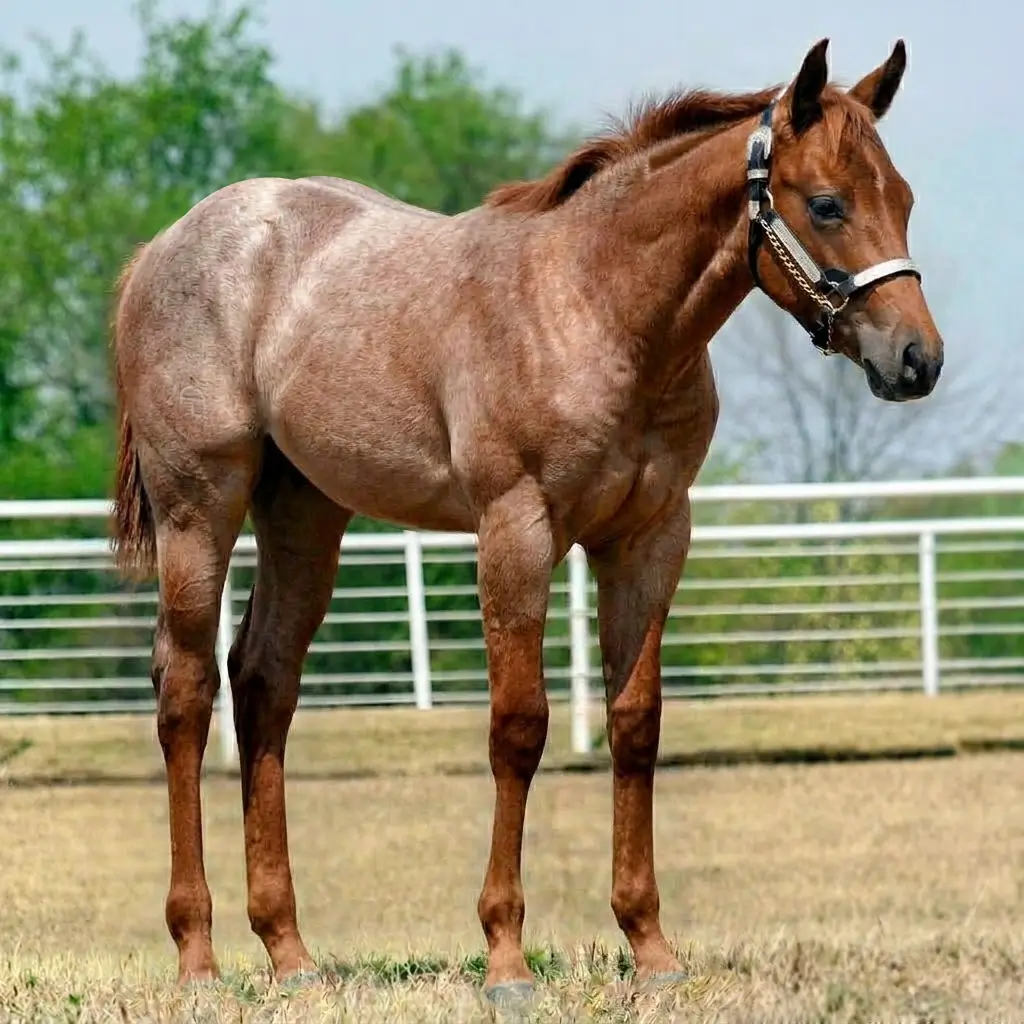
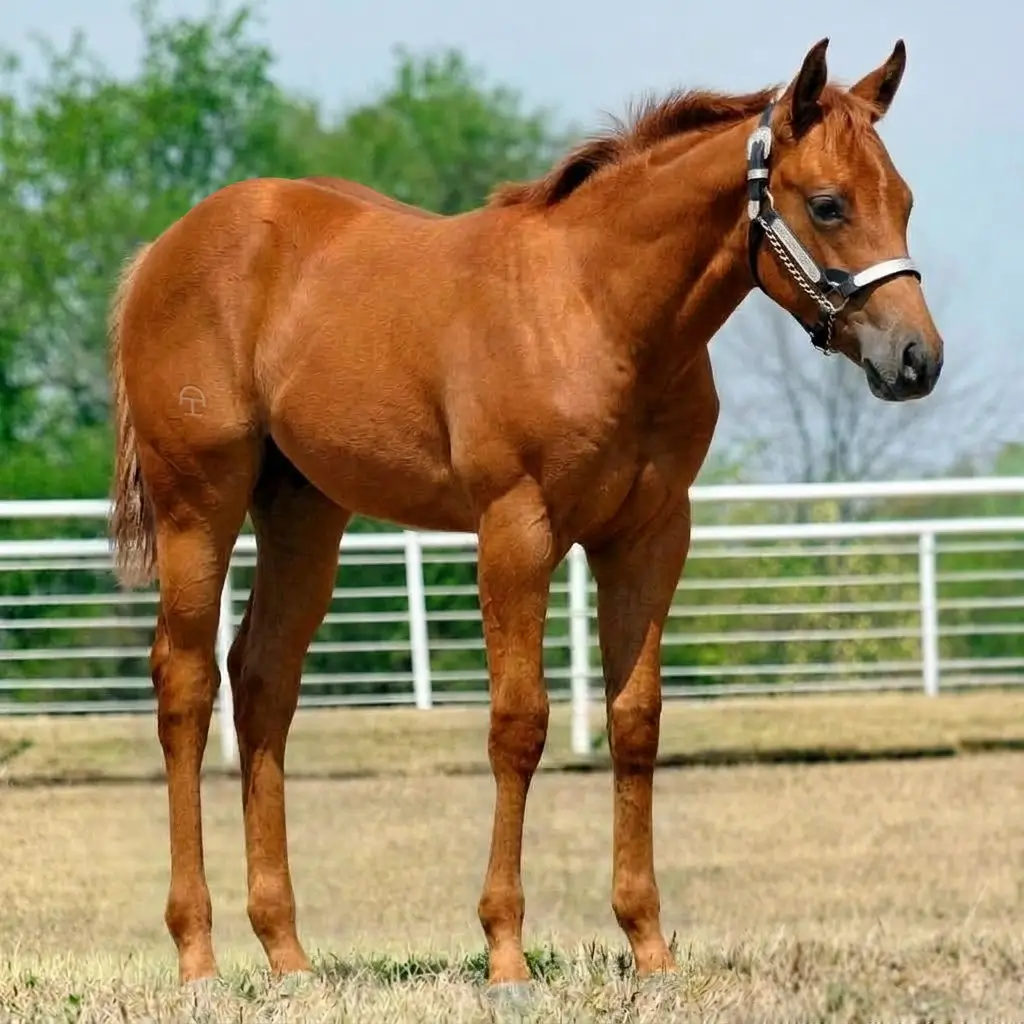
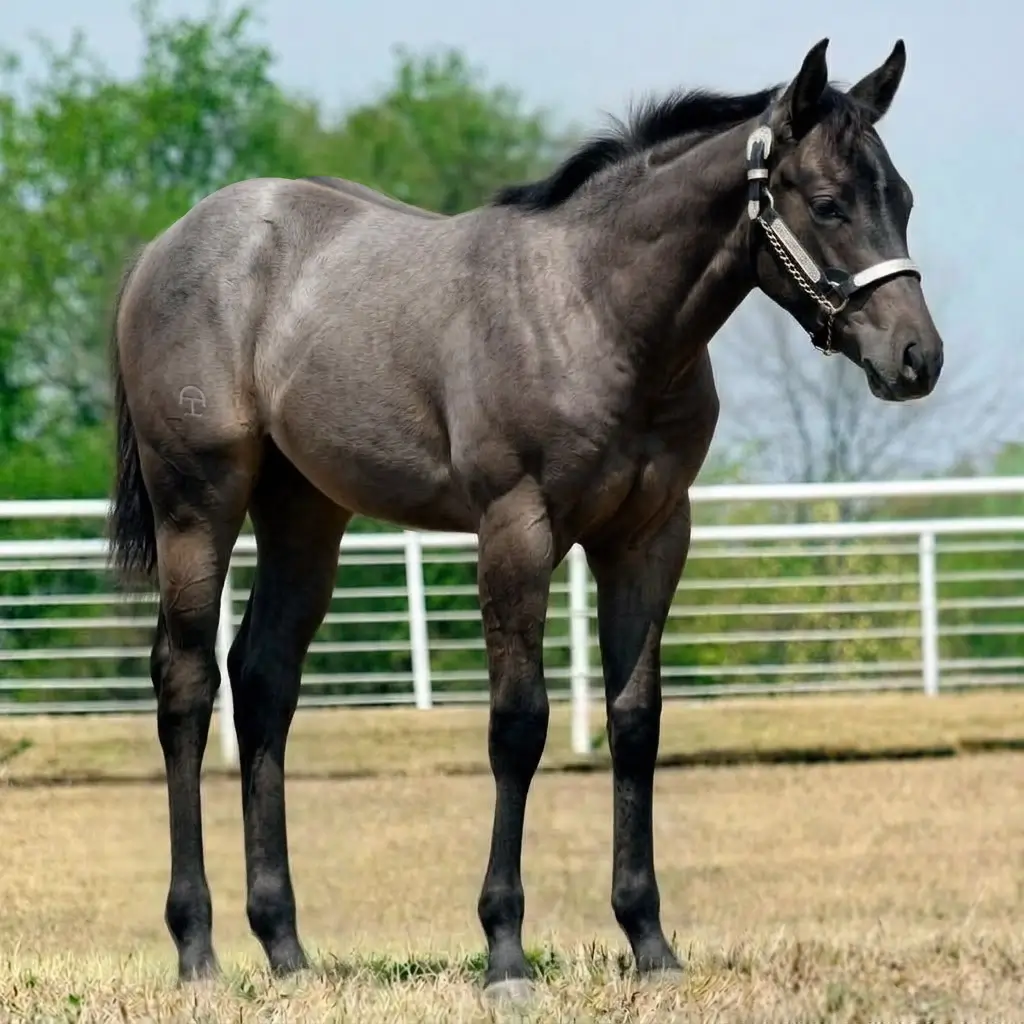
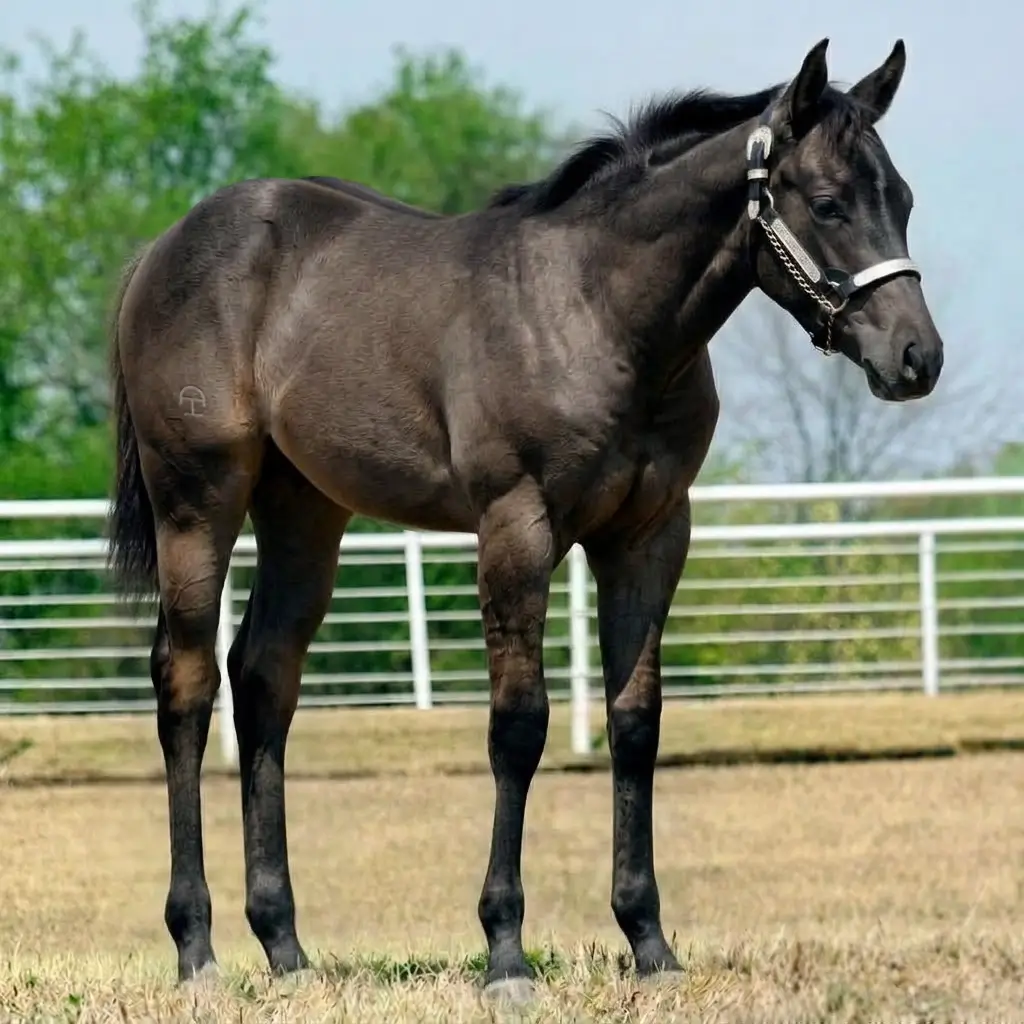
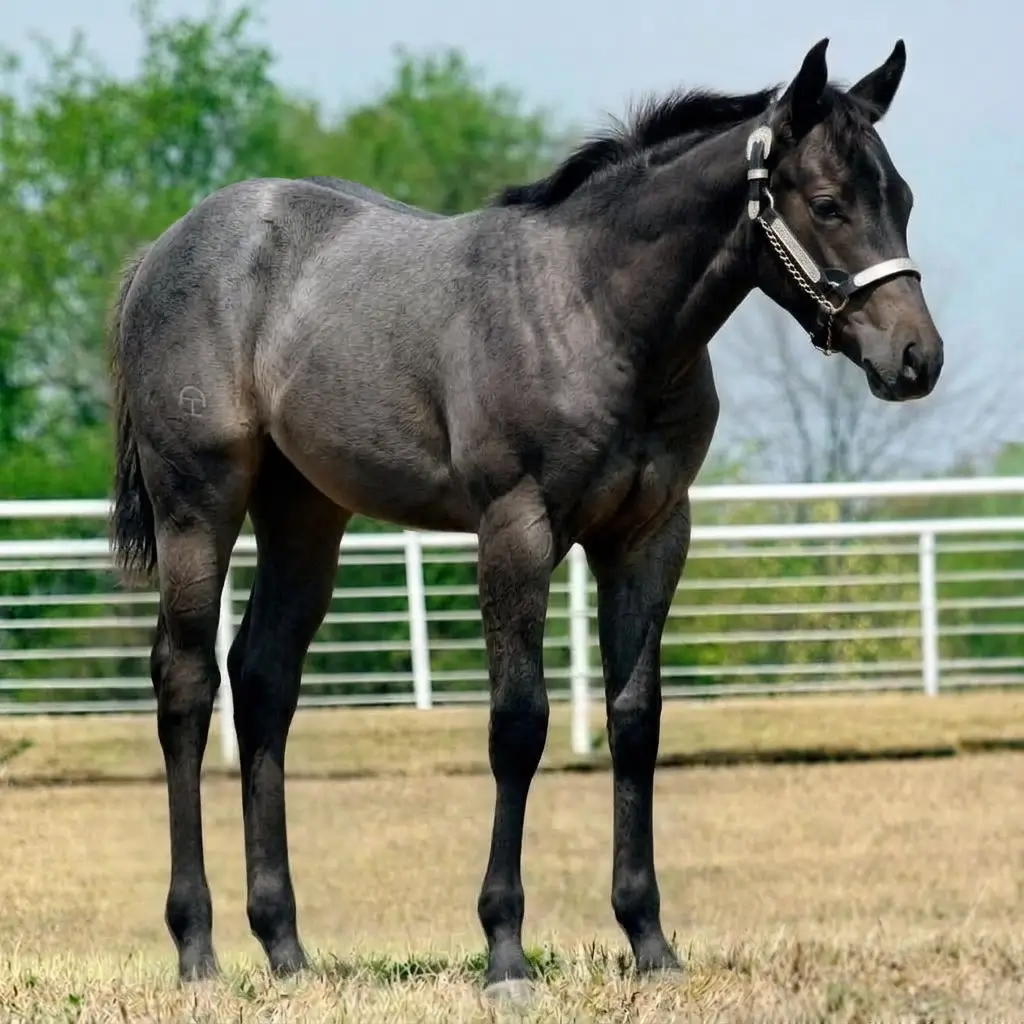
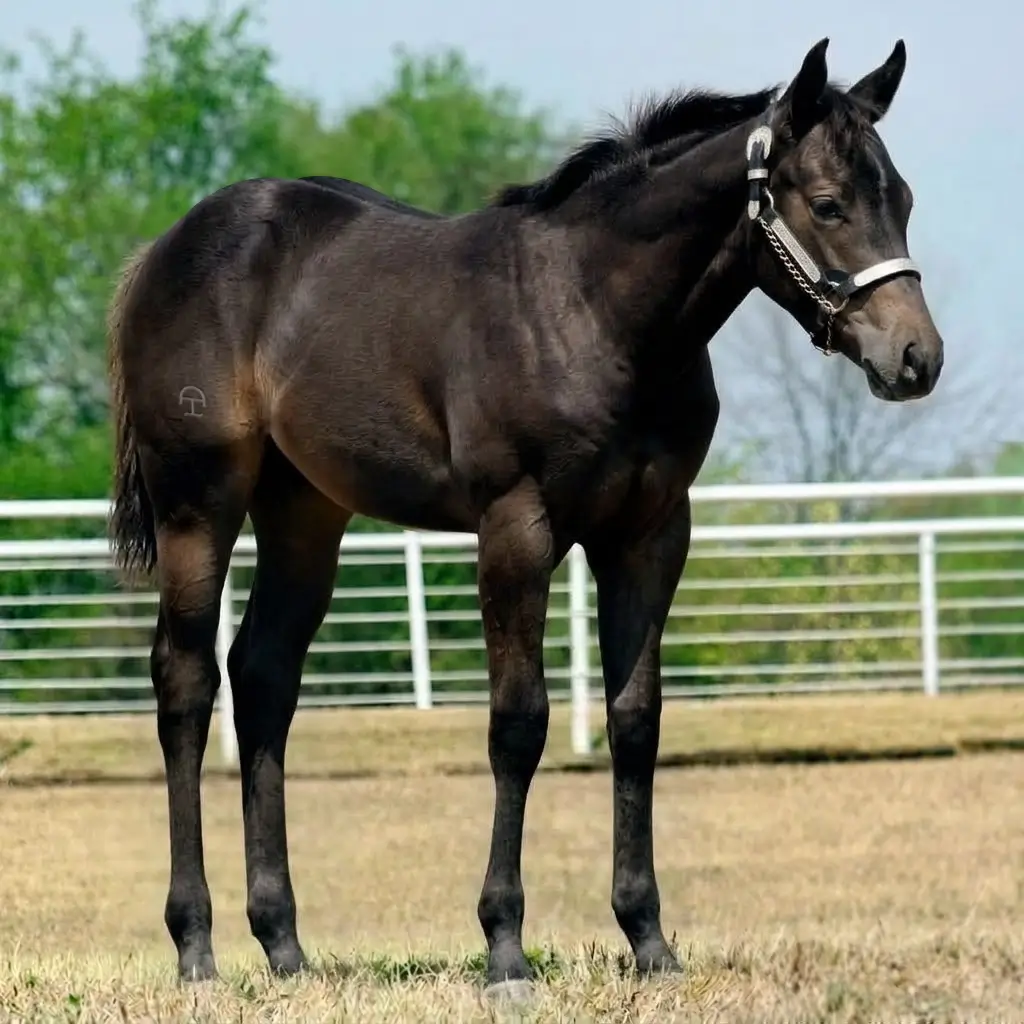
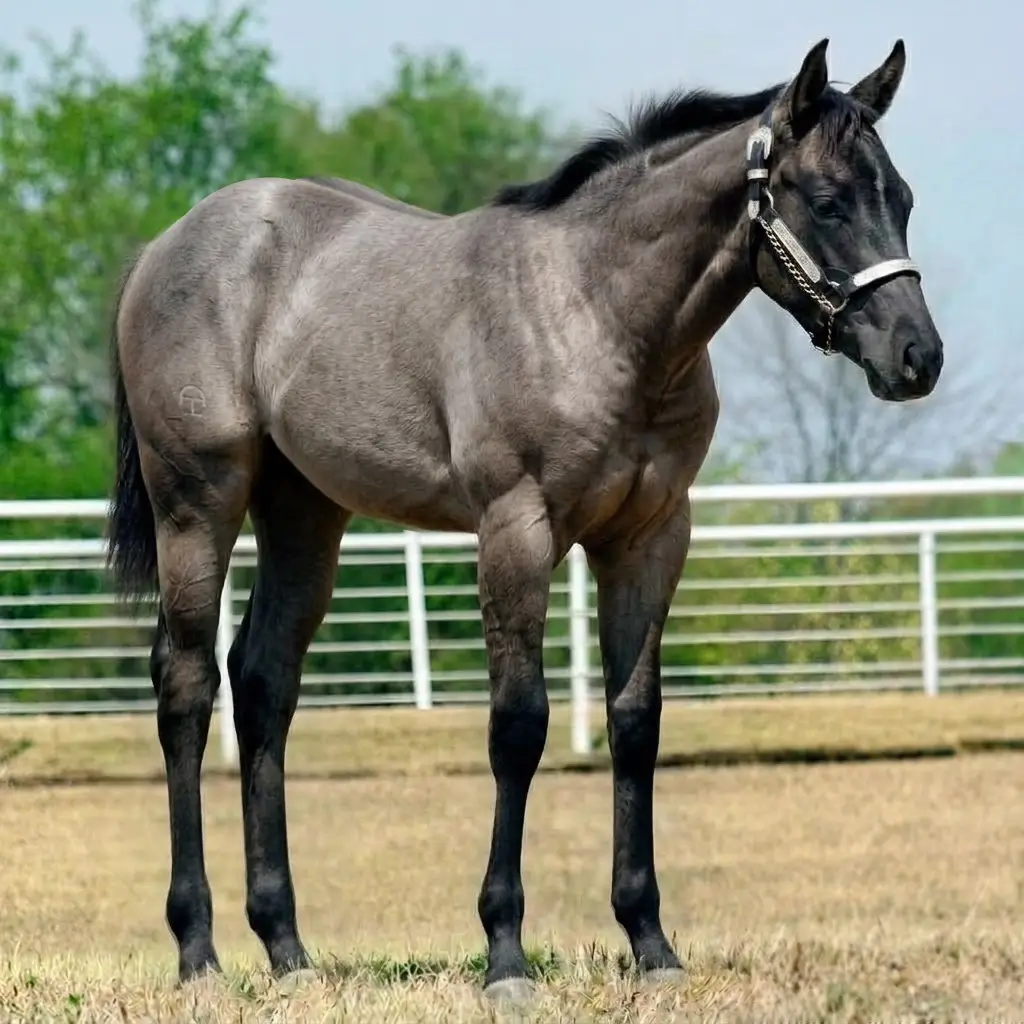
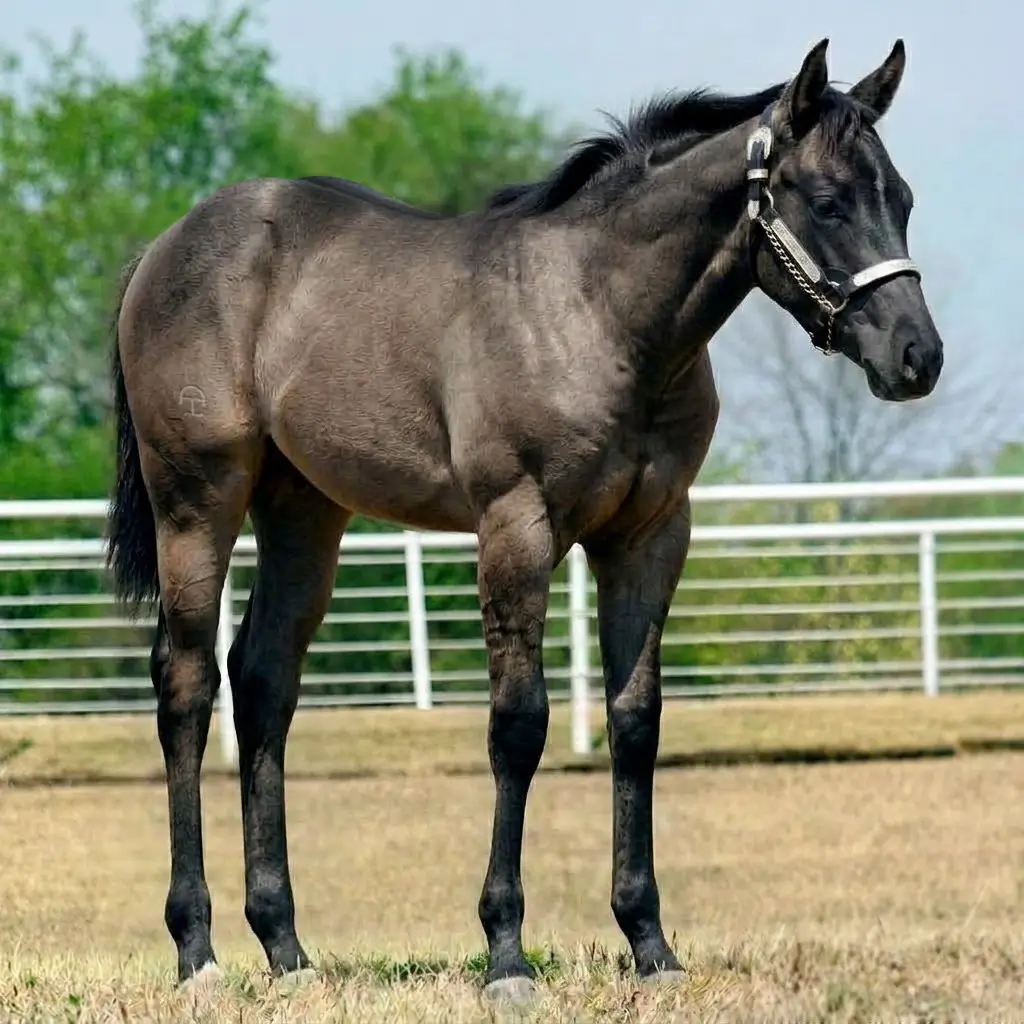
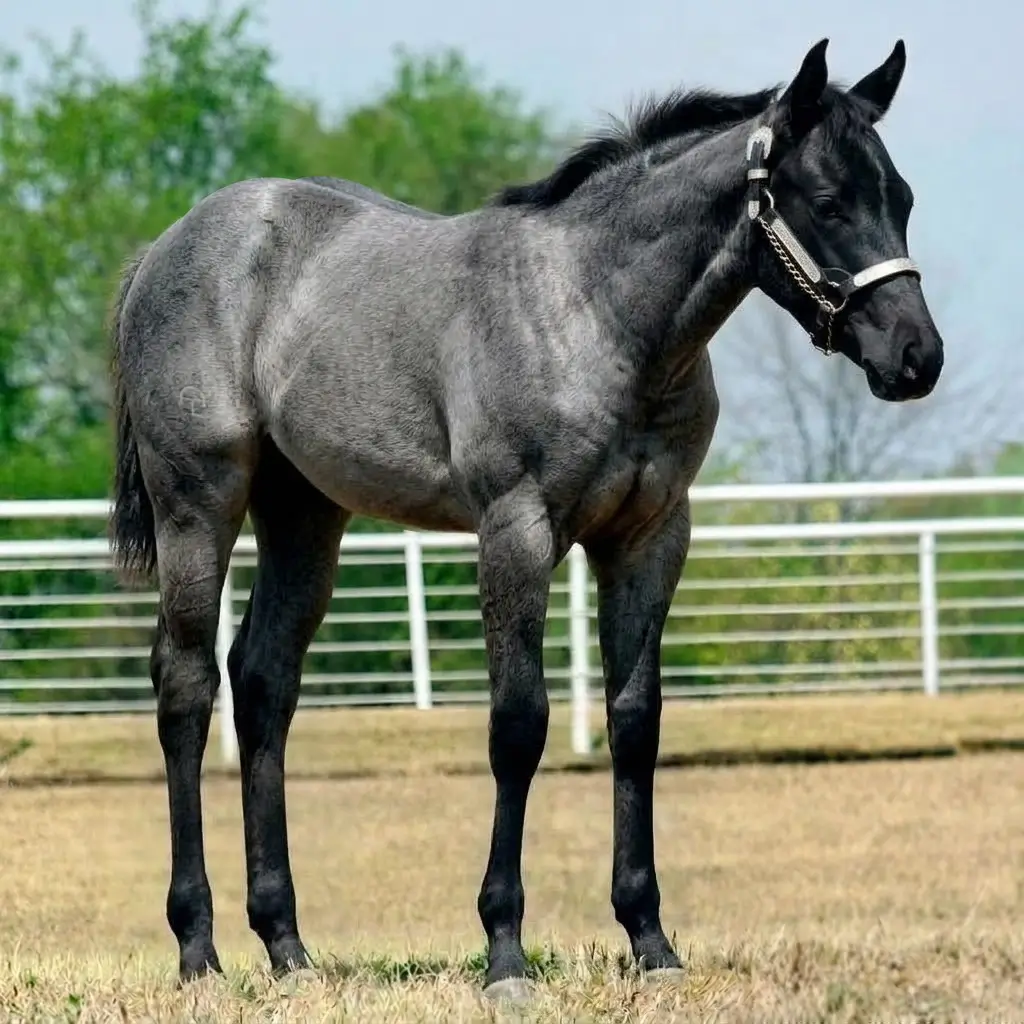
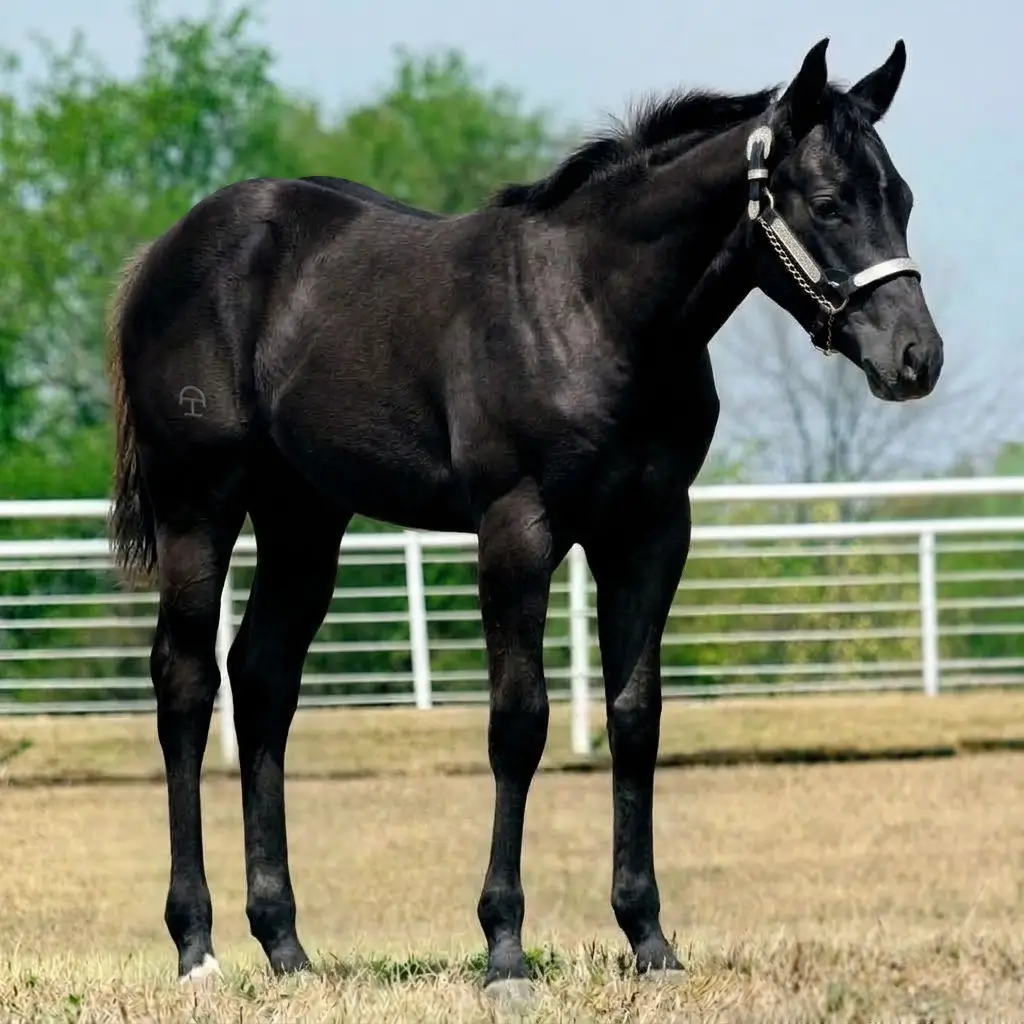
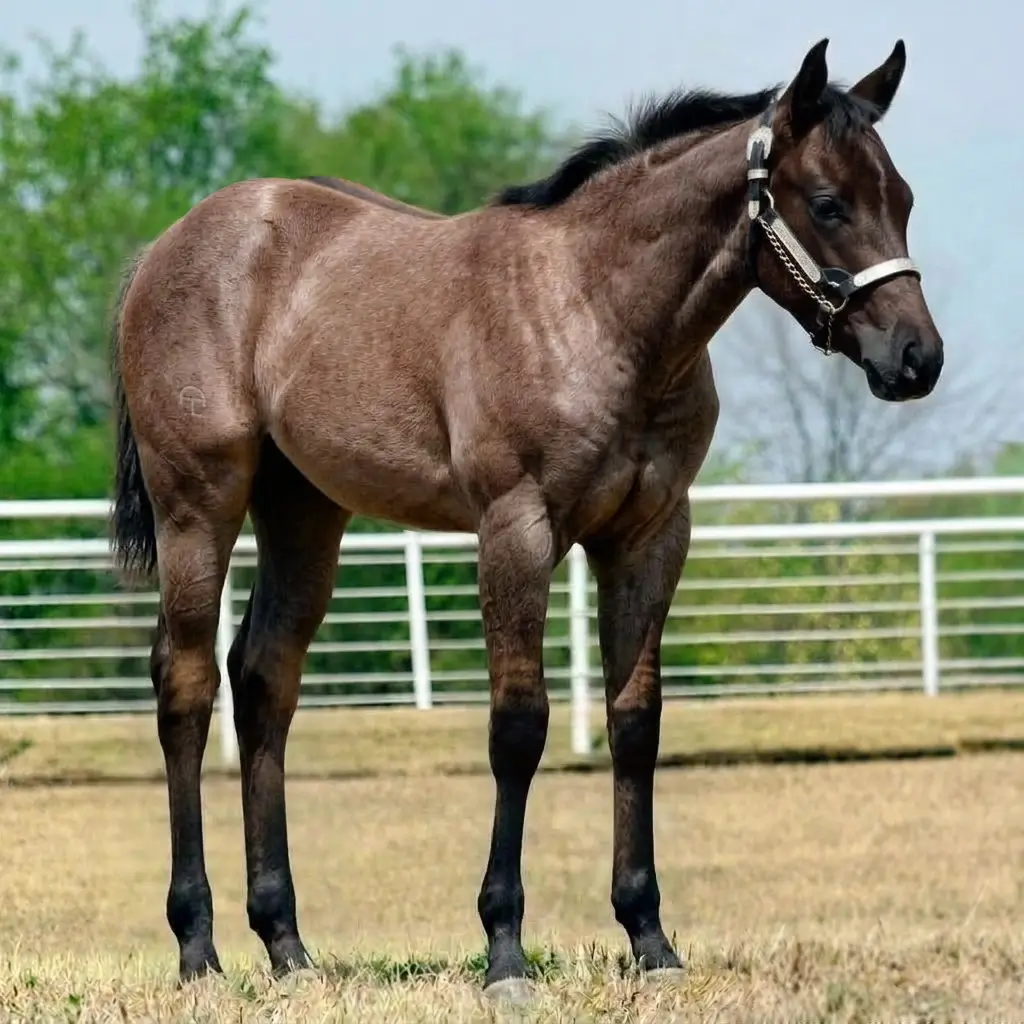
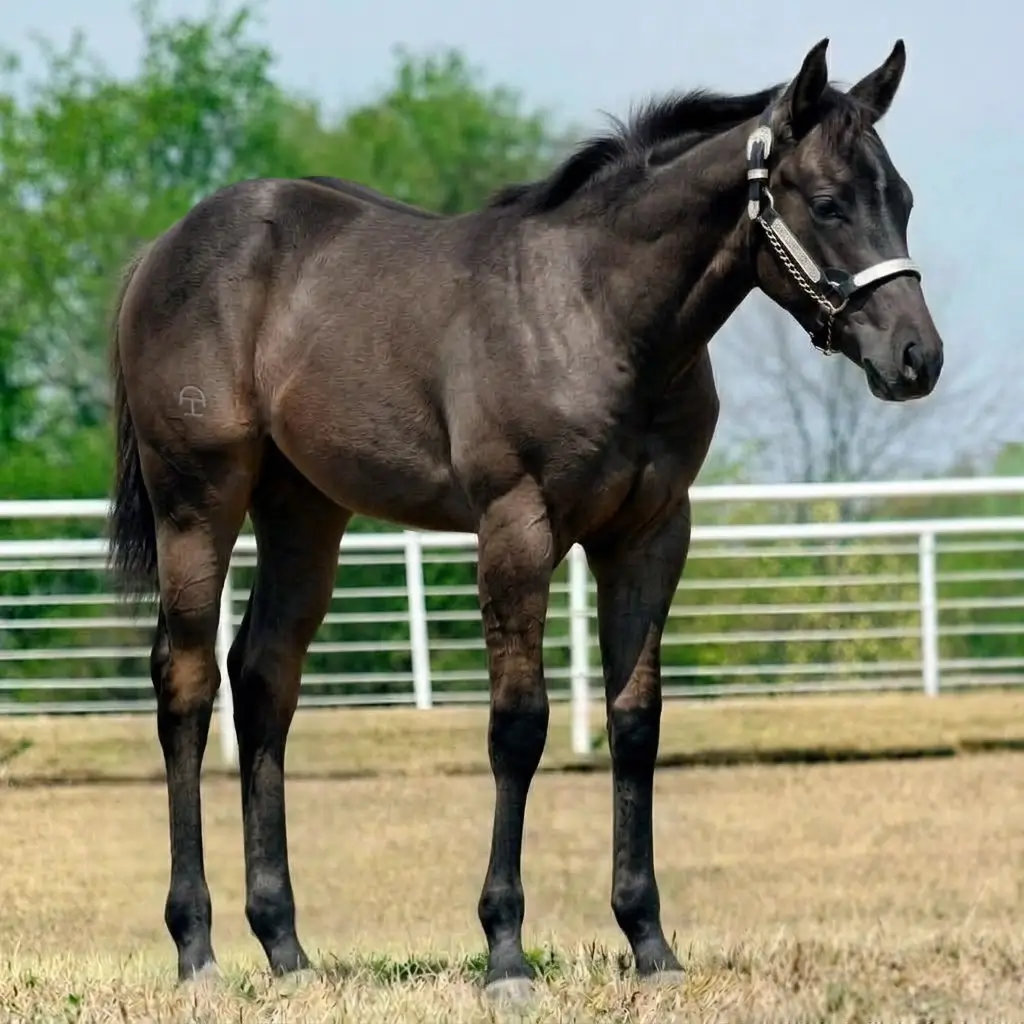
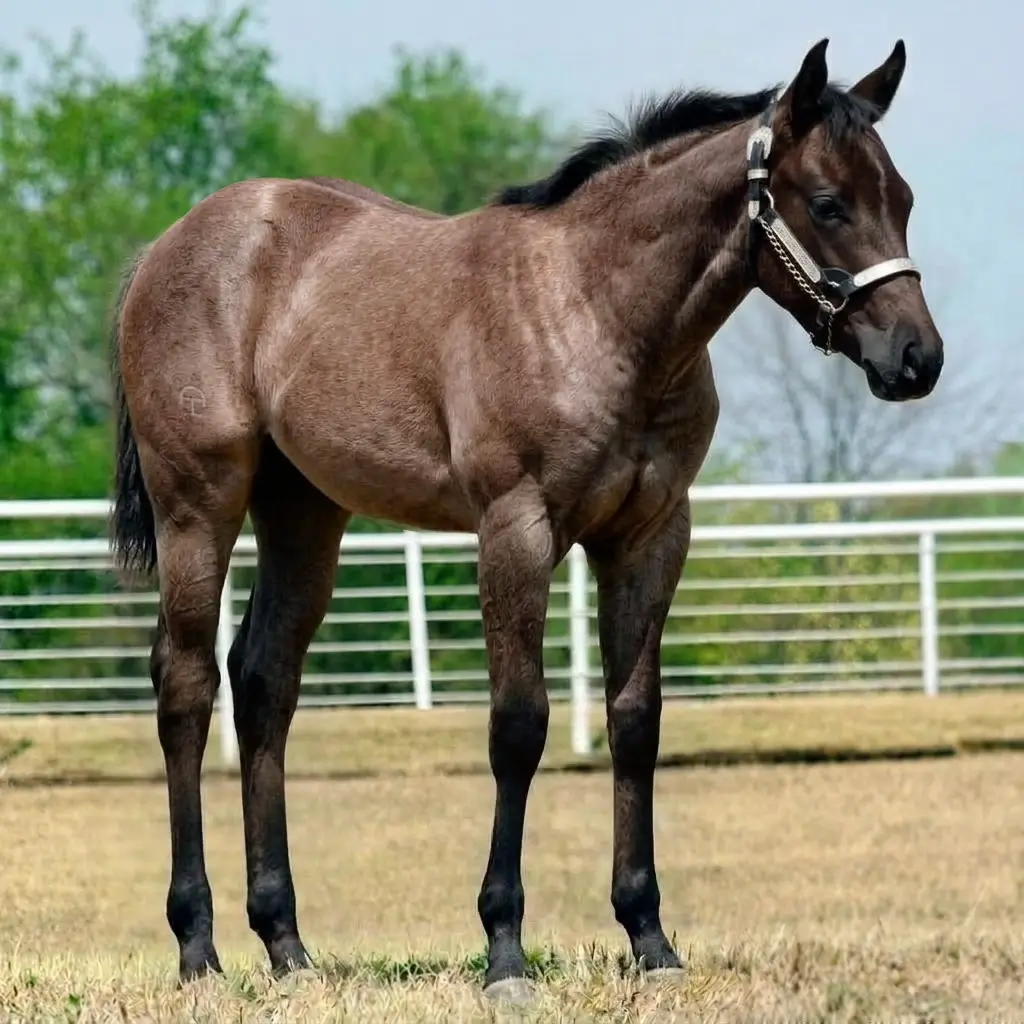
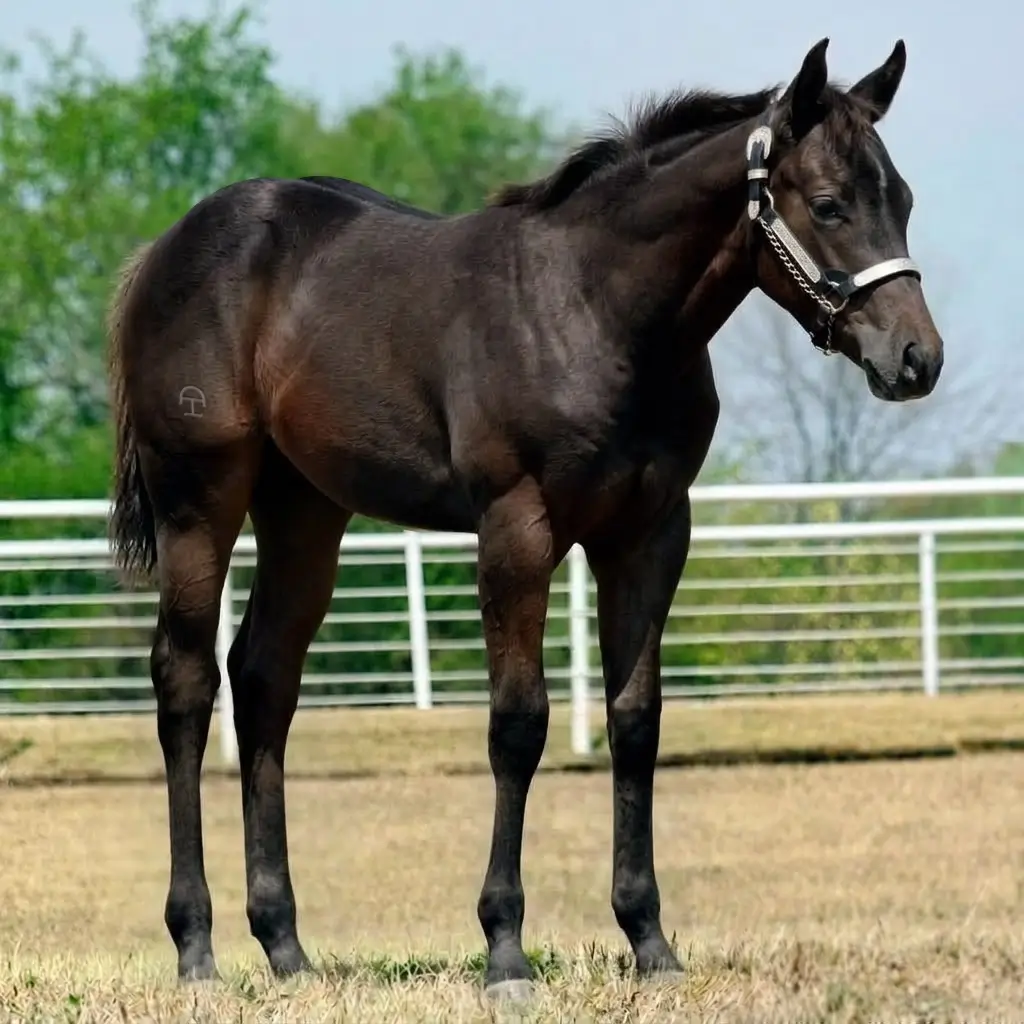
The cross between a Dun Palomino stallion, whose coat the Dun gene acts on the base color, adding the characteristic dark dorsal stripe. In some cases it lightens the body tone and may also produce zebra-like leg markings. Golden coat with a light mane and tail, resulting from a single cream gene dilution over the chestnut base., and a Roan Black mare with coat the (Rn) gene acts on the base coat by distributing white hairs throughout the body, giving it a roan appearance. The head and legs retain the original base color tones. Entirely black coat, with no dilutions and no Agouti gene action restricting black pigment to the points., can produce 28 different coat colors: Roan Dun Buckskin (5%), Dun Buckskin (5%), Roan Buckskin (5%), Buckskin (5%), Roan Dun Bay (4%), Dun Bay (4%), Roan Bay (4%), Bay (4%), Roan Dun Palomino (4%), Dun Palomino (4%), Roan Palomino (4%), Palomino (4%), Roan Dun Chestnut (4%), Dun Chestnut (4%), Roan Chestnut (4%), Chestnut (4%), Roan Dun Smoky Black (3%), Dun Smoky Black (3%), Roan Smoky Black (3%), Smoky Black (3%), Roan Dun Black (3%), Grullo (3%), Roan Black (3%), Black (3%), Roan Dun Dark Brown (0%), Dun Dark Brown (0%), Roan Dark Brown (0%) and Dark Brown (0%). Results vary according to the genotype of each parent — use the filters above to explore specific combinations.


Developed by: Wilson Chavioli Filho
wipsites.com.br

