

Sire Dark Brown on dam Black
In this article, we will explore the genetic possibilities of coat colors for the crossing between a stallion Dark Brown and a mare Black. Equine genetics is a universe of combinations where dominant and recessive alleles determine the final coat of each individual.
On one side, we have the stallion Dark Brown. Genetically, it presents the base genotype E/_ A/_. Dark brown coat, often nearly black, with black points, expressed over the bay base.
On the other side, the mare Black contributes with its genetics based on E/_ a/a. Entirely black coat, with no dilutions and no Agouti gene action restricting black pigment to the points.
Quando combinamos esses códigos genéticos, criamos uma matriz de probabilidades. É importante lembrar que o resultado visual (fenótipo) muitas vezes esconde genes recessivos que podem pular uma geração.
The Genotypes Involved
For a horse to have the coat Dark Brown. it carries specific gene combinations. The possible genotypes for the sire include variants such as: E/e A/a, E/e A/A, E/E A/a, E/E A/A.
As for the dam, being Black, may present in its DNA the alleles: E/e a/a, E/E a/a.
Understanding the Alleles
To understand the result of this crossing, note the gene sets at play:
- E/ (Extension - Dominant): The Extension gene controls eumelanin (black) production. At least one E allele allows the horse to have black hairs.
- A/ (Agouti - Dominant): The Agouti gene controls black distribution. The A allele restricts black pigment to the points (mane, tail, legs).
- a/a (Non-Agouti - Recessive): Allows black pigment to spread uniformly across the body. Essential for Solid Black (if E/).
Calculated Probabilities
Being the sire Dark Brown with genotype (E/e A/a), it transmits the (E) allele (black factor) to 50% and the (e) allele (red factor) to the other 50% and transmits the (A) allele (restriction) to 50% and the (a) allele (no restriction) to the other 50%.
Being the sire Dark Brown with genotype (E/e A/A), it transmits the (E) allele (black factor) to 50% and the (e) allele (red factor) to the other 50% and transmits the (A) allele to 100% of offspring, restricting black pigment to the extremities.
Being the sire Dark Brown with genotype (E/E A/a), it transmits the (E) allele to 100% of offspring, enabling black pigment production (eumelanin) and transmits the (A) allele (restriction) to 50% and the (a) allele (no restriction) to the other 50%.
Being the sire Dark Brown with genotype (E/E A/A), it transmits the (E) allele to 100% of offspring, enabling black pigment production (eumelanin) and transmits the (A) allele to 100% of offspring, restricting black pigment to the extremities.
Being the dam Black with genotype (E/e a/a), it transmits the (E) allele (black factor) to 50% and the (e) allele (red factor) to the other 50% and transmits the (a) allele to 100% of offspring, allowing black to spread in homozygosis (if Extension is present).
Being the dam Black with genotype (E/E a/a), it transmits the (E) allele to 100% of offspring, enabling black pigment production (eumelanin) and transmits the (a) allele to 100% of offspring, allowing black to spread in homozygosis (if Extension is present).
Based on a standard scenario, the statistical chances for foals from this crossing are:
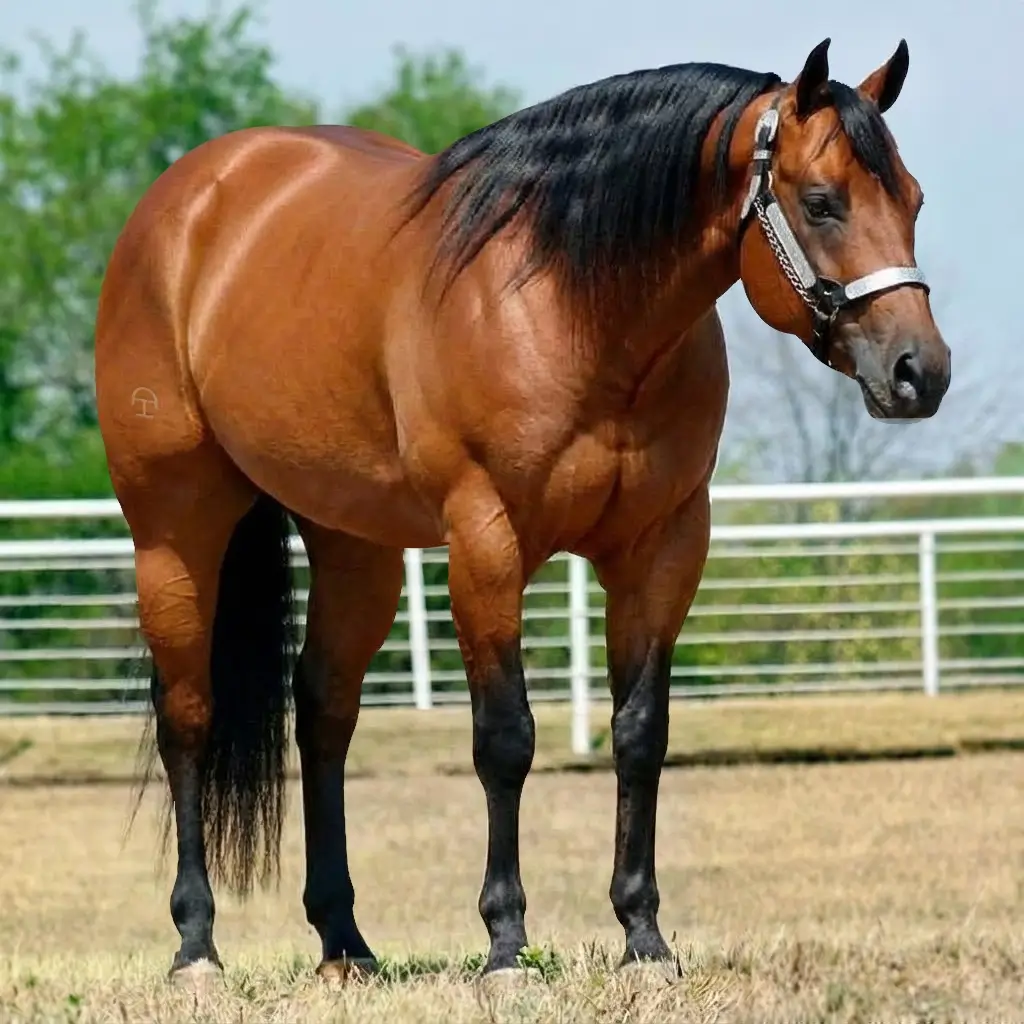 Bay
BayOpen Coat ➜ 53,3%
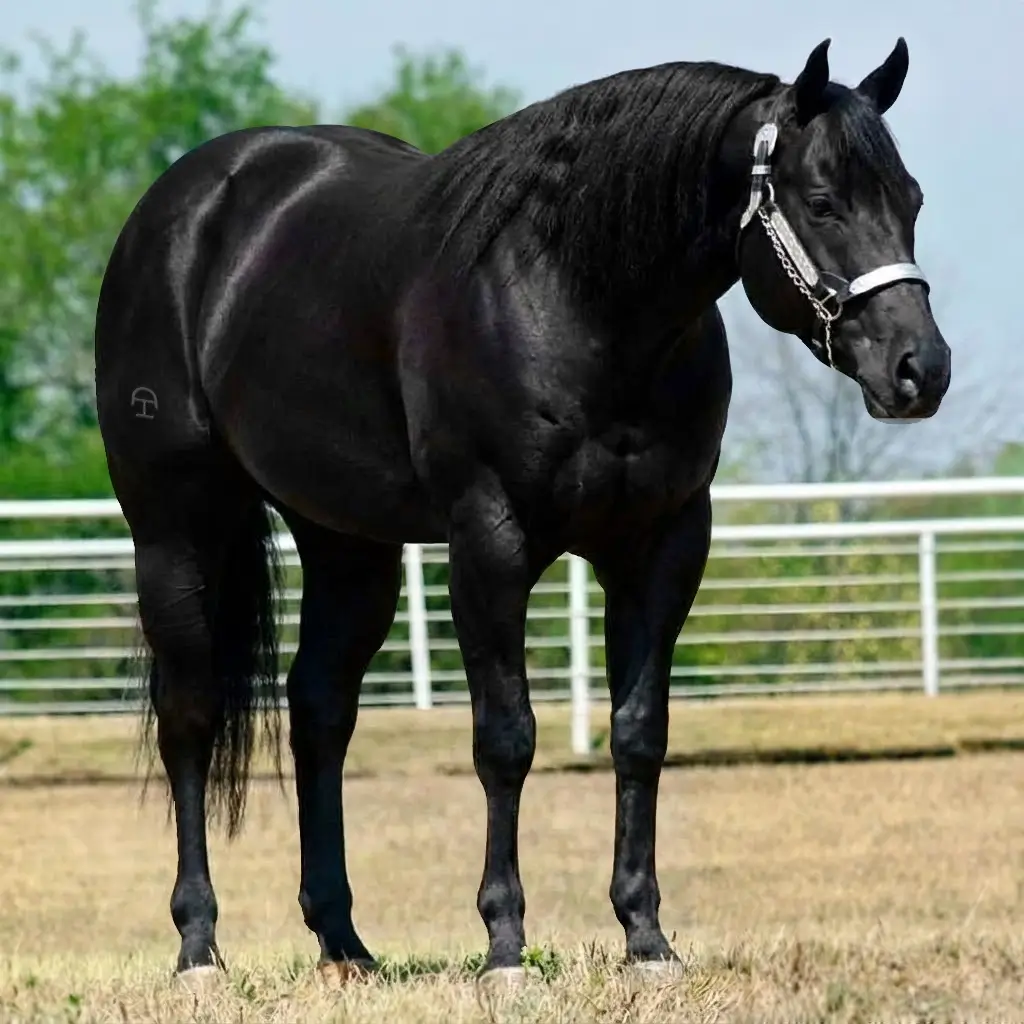 Black
BlackOpen Coat ➜ 28,6%
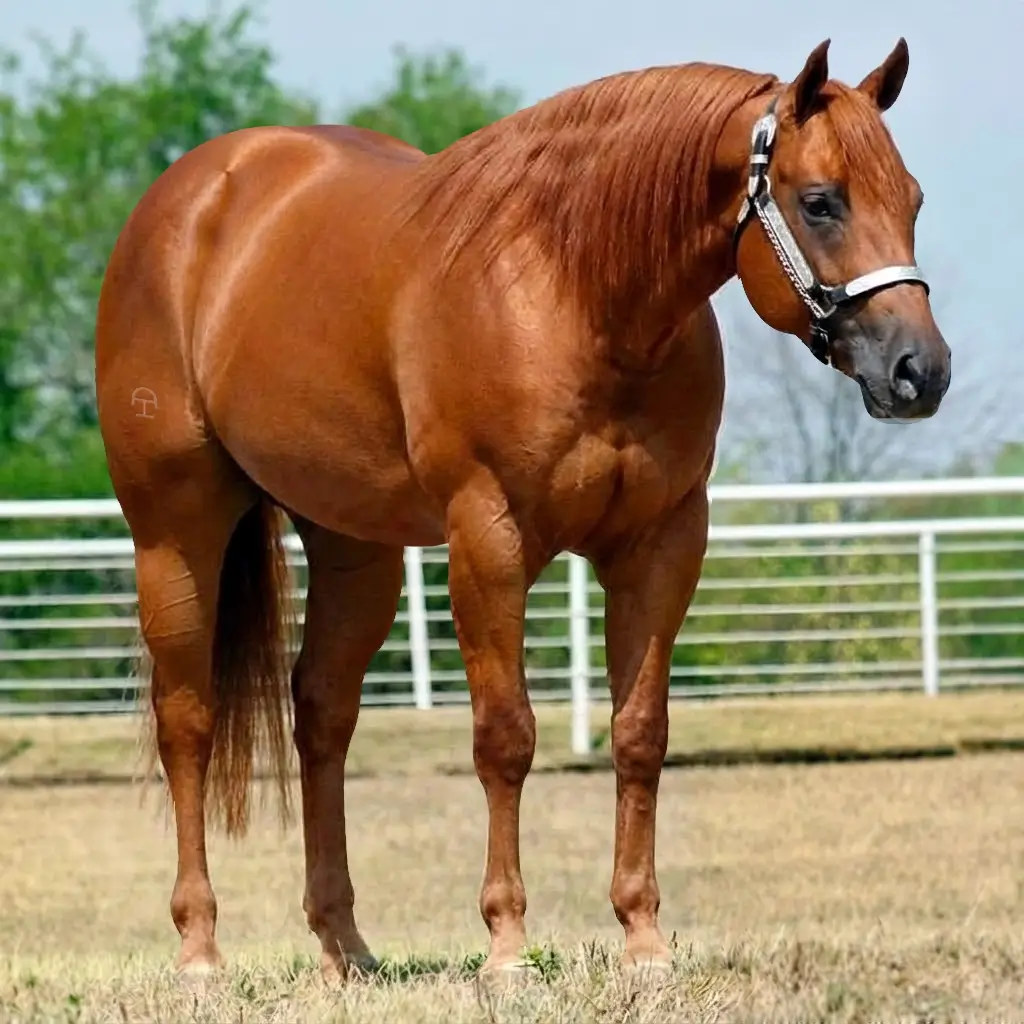 Chestnut
Open Coat ➜ 12,3%
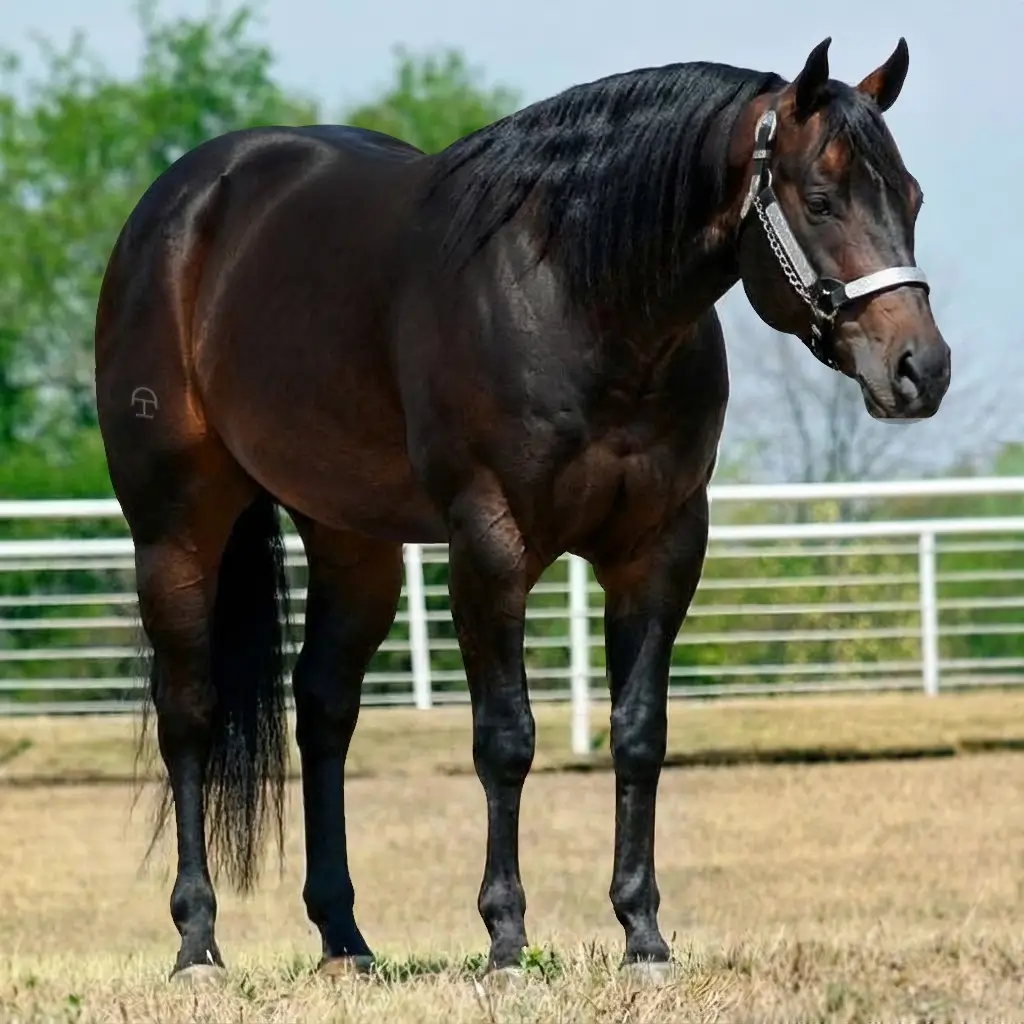 Dark Brown
Open Coat ➜ 5,9%
Want absolute precision?
Genetics is detailed. Knowing whether the animal is Homozygous or Heterozygous completely changes the result. You can run 100% precise simulations by filtering according to the exact genotype of your animal in our App.
Open Rancholi Simulator